
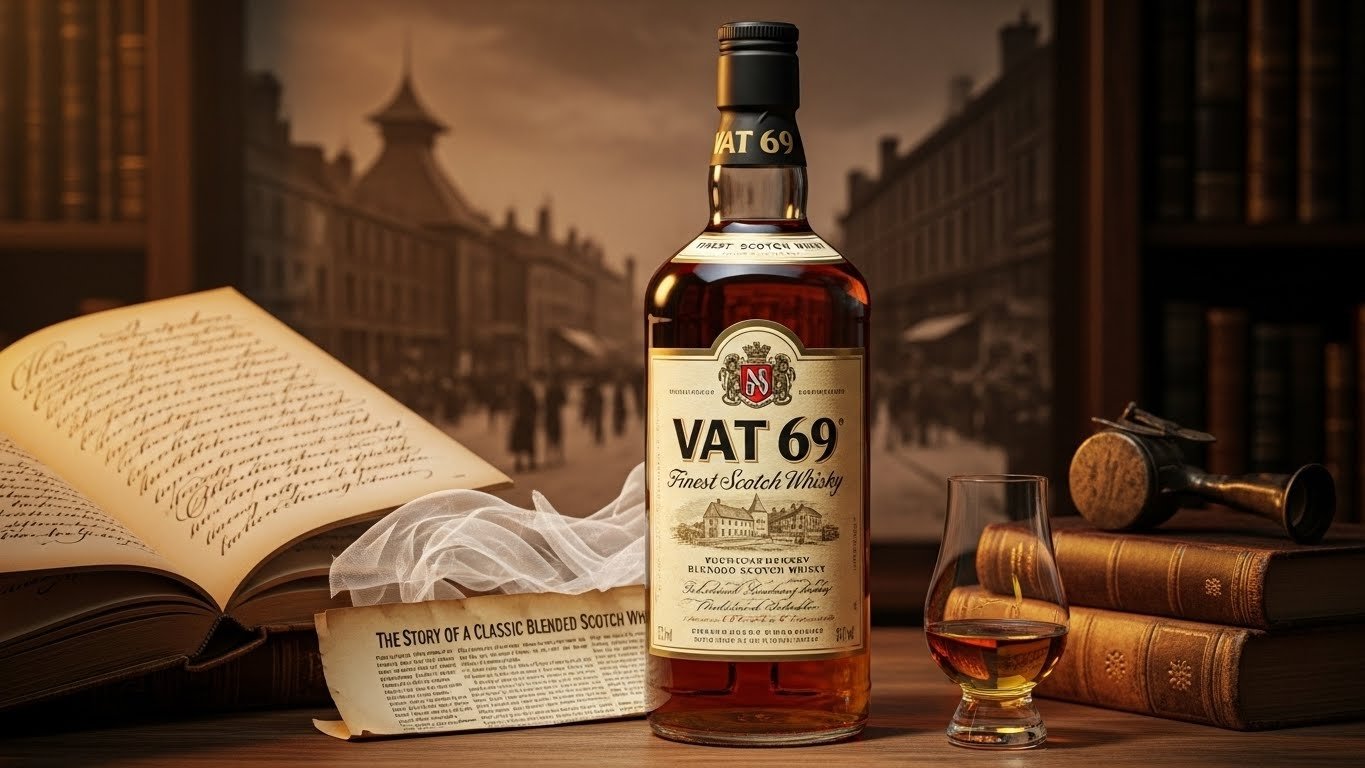
When it comes to the world of blended Scotch whisky, few names carry the historical weight and instant recognition of Vat 69. Known for its iconic green bottle and the bold, numerical branding, this blend has been a staple in the spirits industry for over a century. From the high-stakes tasting rooms of 19th-century Scotland to the battlefields of World War II and the silver screen, its journey is as complex as its flavor profile.
The Origins: A Masterful Blending Experiment
The story of Vat 69 begins in 1882 with a man named William Sanderson. A seasoned distiller and blender from Leith, Scotland, Sanderson wanted to create a blend that would set a new standard for quality and consistency. Unlike many of his contemporaries who relied on a single recipe. Sanderson decided to take a more “democratic” approach to perfection.
You Might Also Like: Oaksmith Gold
He prepared 100 different casks (vats) of blended whisky, each with a slightly different ratio of malt and grain spirits. To ensure the final product was truly the best, he assembled a panel of expert tasters and connoisseurs. After a rigorous blind tasting process, the consensus was unanimous: Vat number 69 was the superior blend. Sanderson, recognizing the simplicity and power of the result, decided that the winning cask number would become the name of the brand.
The Distinctive Flavor Profile
What makes Vat 69 stand out in a crowded market of blended scotches is its balance. Blended Scotch is an art form that requires mixing lighter grain whiskies with more robust, flavorful malt whiskies.
Key Characteristics:
- Nose: On the first sniff, you encounter a subtle sweetness. Notes of caramel, toasted cereal, and a hint of pear provide a welcoming aroma.
- Palate: The mouthfeel is surprisingly smooth for an entry-level blend. It offers a mix of spicy malt, honeyed sweetness, and a touch of oak.
- Finish: The finish is short to medium, leaving a gentle warmth with a lingering note of wood smoke and malt.
While it doesn’t possess the heavy peat of an Islay malt. It retains enough character to be enjoyed neat, on the rocks, or as a reliable base for classic cocktails.
Cultural Impact and Iconic Status
The legacy of Vat 69 is not just found in the bottle, but in how it has been perceived by the public over the decades. It has frequently appeared in literature, film, and television, often used as a symbol of rugged reliability or classic taste.
Perhaps its most famous “role” was in the acclaimed miniseries Band of Brothers. Captain Lewis Nixon, portrayed by Ron Livingston, is famously depicted as a staunch devotee of Vat 69. Throughout the hardships of the European theater in WWII, Nixon’s search for his favorite whisky became a recurring theme, cementing the brand’s association with the era and the “Greatest Generation.”
Beyond the screen, the brand was also chosen by Sir Ernest Shackleton for his 1914 Imperial Trans-Antarctic Expedition, further proving that this blend was built for those with an adventurous spirit.
The Art of the Blend: Behind the Scenes
Creating a consistent bottle of Vat 69 today requires a deep understanding of Scotland’s different distilling regions. The blend typically incorporates around 40 different malt and grain whiskies.
The malt components often come from renowned distilleries like Clynelish and Royal Lochnagar. By combining the floral, light notes of Lowland whiskies with the richer, fruitier profiles of Highland malts. The master blender ensures that every bottle tastes exactly like the original “vats” selected by Sanderson’s panel over 140 years ago.
Why Blending Matters
In the late 1800s, single malts were often considered too harsh or inconsistent for the general public. Blending allowed for:
- Consistency: Ensuring the bottle you buy in London tastes the same as the one in New York.
- Smoothness: The addition of grain whisky “mellows out” the intense flavors of the malt.
- Accessibility: Making high-quality whisky available at a more affordable price point.
How to Enjoy This Classic Scotch
While purists might argue that Scotch should only be enjoyed neat, Vat 69 is versatile enough to accommodate various preferences. Its accessible price point and balanced flavor make it an excellent choice for experimentation.
1. The Neat Experience
To truly appreciate the history of the blend, try it in a Glencairn glass at room temperature. This allows the aromas to concentrate, giving you a better sense of the malt-to-grain ratio.
2. The Highball
For a refreshing summer drink, fill a tall glass with ice, add 50ml of Vat 69, and top it with premium soda water. A twist of lemon peel adds a bright acidity that complements the toasted cereal notes of the whisky.
3. The “Rusty Nail”
Because of its spicy undertones, it works beautifully in a Rusty Nail. Mix two parts whisky with one part Drambuie over ice. The heather honey notes of the liqueur bring out the hidden sweetness of the blend.
Why It Remains Relevant Today
In an era where “premiumization” and “limited edition” single malts dominate the headlines, why does a blend like Vat 69 continue to thrive? The answer lies in its honesty. It doesn’t pretend to be a rare, 50-year-old masterpiece; it is a hard-working, reliable Scotch that delivers a consistent experience every time.
It represents a bridge to the past—a time when the “Leith style” of blending was the gold standard of the industry. For many, it serves as the perfect “entryway” whisky, introducing new drinkers to the world of Scotch without the intimidating price tag or the overwhelming smoke of more medicinal malts.
Conclusion
Whether you are a history buff inspired by Band of Brothers, a budget-conscious enthusiast looking for a reliable “daily dram,” or a cocktail lover in need of a sturdy base, Vat 69 remains a quintessential choice.
William Sanderson’s experiment in 1882 proved that the best results often come from trial, error, and the collective palate of those who truly love the craft. More than a century later, the spirit of that 69th vat lives on in every green bottle. Reminding us that quality doesn’t always have to be complicated—it just has to be right.
Would you like me to research current market pricing or availability for this whisky in a specific region?