



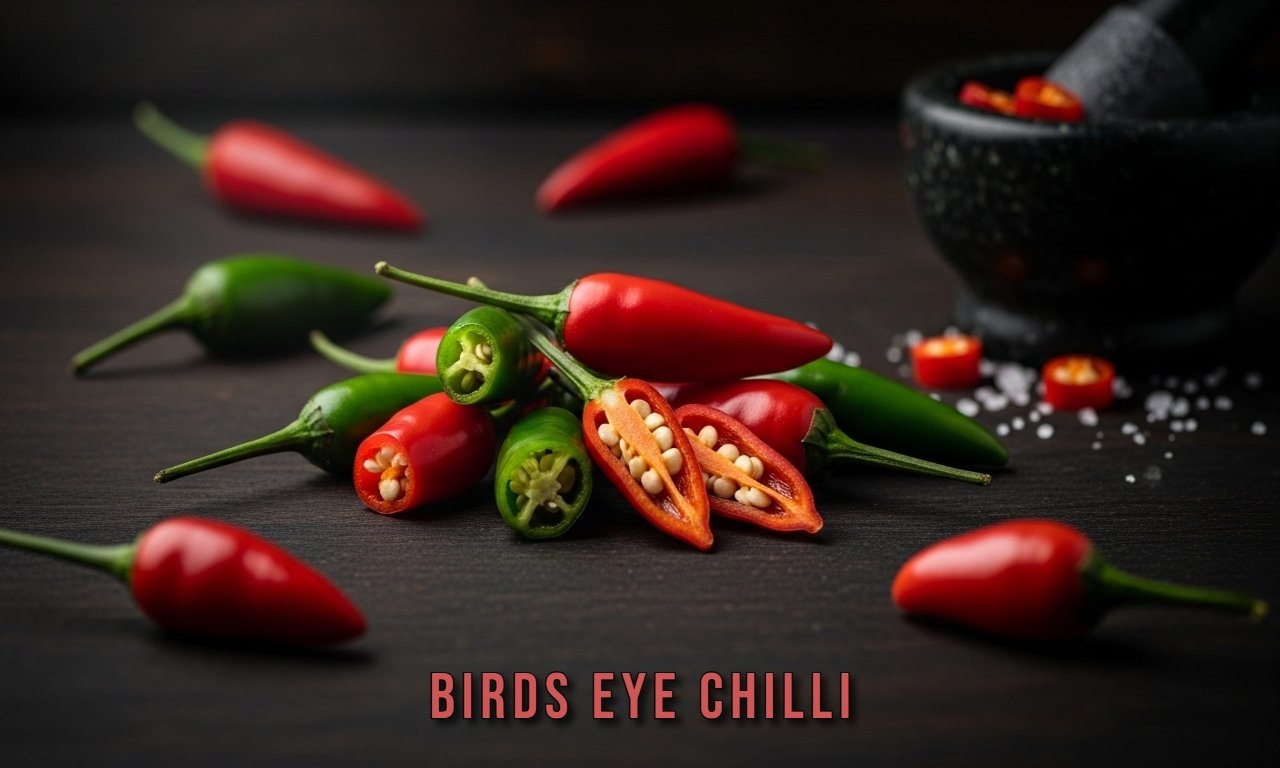
The Birds Eye Chilli may be small in stature, but it carries a punch that has defined the culinary landscapes of Southeast Asia and Africa for centuries. Known for its intense heat and fruity undertones, this pepper is a staple for spice enthusiasts.
What is the Birds Eye Chilli?
Scientifically classified as Capsicum annuum, though often confused with Capsicum frutescens, this pepper is a perennial plant in tropical climates. It gets its name from its appearance and the way it is spread; birds are immune to the heat of capsaicin and consume the peppers, distributing the seeds across vast distances.
The Birds Eye Chilli is remarkably small, usually measuring only 1 to 2 centimeters in length. Despite its size, it ranks significantly high on the Scoville scale, making it one of the most popular hot peppers globally.
The Scoville Heat Units (SHU)
To understand the power of this chilli, we must look at the Scoville Heat Scale. While a standard Jalapeño sits comfortably between 2,500 and 8,000 SHU, the Birds Eye Chilli typically ranges from 50,000 to 100,000 SHU.
You Might Also Like: Pravi Celer
This puts it in the “very hot” category—hotter than a Cayenne pepper but generally milder than a Habanero. It provides a sharp, immediate heat that lingers on the tongue without completely overpowering the flavors of the dish.
Culinary Uses Across the Globe
In Southeast Asian cuisine, specifically in Thailand, Vietnam, and Malaysia, the Birds Eye Chilli is indispensable. It is the backbone of many iconic dishes, providing the essential “zing” that balances sweet, sour, and salty profiles.
Thai Cuisine
In Thailand, these peppers are known as Prik Ki Nu (mouse dropping chilli). They are used in:
- Tom Yum Soup: For a clear, spicy broth.
- Som Tum (Papaya Salad): Where the peppers are bruised in a mortar to release their oils.
- Nam Prik: A variety of spicy dipping sauces.
African Cuisine
In Africa, particularly in Ethiopia and Malawi, a variety of this pepper is used to create Peri-Peri (or Piri-Piri) sauces. The Birds Eye Chilli provides the base for marinades that are world-famous for their application on grilled poultry and seafood.
Health Benefits of the Birds Eye Chilli
Beyond the heat, consuming these peppers offers several physiological benefits. The primary compound, capsaicin, is responsible for more than just the “burn.”
- Metabolism Boost: Capsaicin has thermogenic properties, which can slightly increase the body’s metabolic rate and aid in calorie burning.
- Pain Relief: Topical applications of capsaicin are often used to treat joint pain and arthritis by desensitizing pain receptors.
- Heart Health: Studies suggest that hot peppers like the Birds Eye Chilli can help reduce blood cholesterol and lipid levels.
- Vitamin Rich: These peppers are packed with Vitamin C and Vitamin A, which are essential for immune function and vision.
Cultivation and Growing Tips
Growing your own Birds Eye Chilli is relatively simple if you have a warm, sunny environment.
Ideal Conditions
- Temperature: They thrive in temperatures between 20°C and 30°C.
- Soil: Well-draining, organic soil is a must. They do not like “wet feet” or waterlogged roots.
- Sunlight: At least 6 hours of direct sunlight per day.
Harvesting
The peppers start green and transition to a vibrant red when fully ripe. You can harvest them at either stage, but the red version of the Birds Eye Chilli is typically sweeter and packs a more developed heat profile.
Managing the Heat: Safety First
When working with the Birds Eye Chilli, caution is key. The oils containing capsaicin can easily transfer from your hands to your eyes or skin, causing intense irritation.
- Wear Gloves: If you are sensitive, wear latex or nitrile gloves while chopping.
- Don’t Use Water: If the heat becomes too much while eating, reach for milk or yogurt. Capsaicin is fat-soluble, and the protein casein in dairy helps wash it away.
- Neutralizing Surfaces: Use lemon juice or vinegar to clean cutting boards after processing a Birds Eye Chilli to neutralize the oils.
Storage and Preservation
If you have a surplus of peppers, there are several ways to keep them fresh:
- Drying: String them together and hang them in a dry place. Dried Birds Eye Chilli can be ground into flakes.
- Freezing: They freeze exceptionally well in airtight bags.
- Pickling: Submerge them in a vinegar brine to maintain their crunch and heat for months.
Conclusion
The Birds Eye Chilli remains a favorite for chefs and home cooks alike because of its versatility and reliable heat. Whether you are crafting a fiery Thai curry or a spicy African marinade, this tiny pepper ensures that your dish will never be dull.