


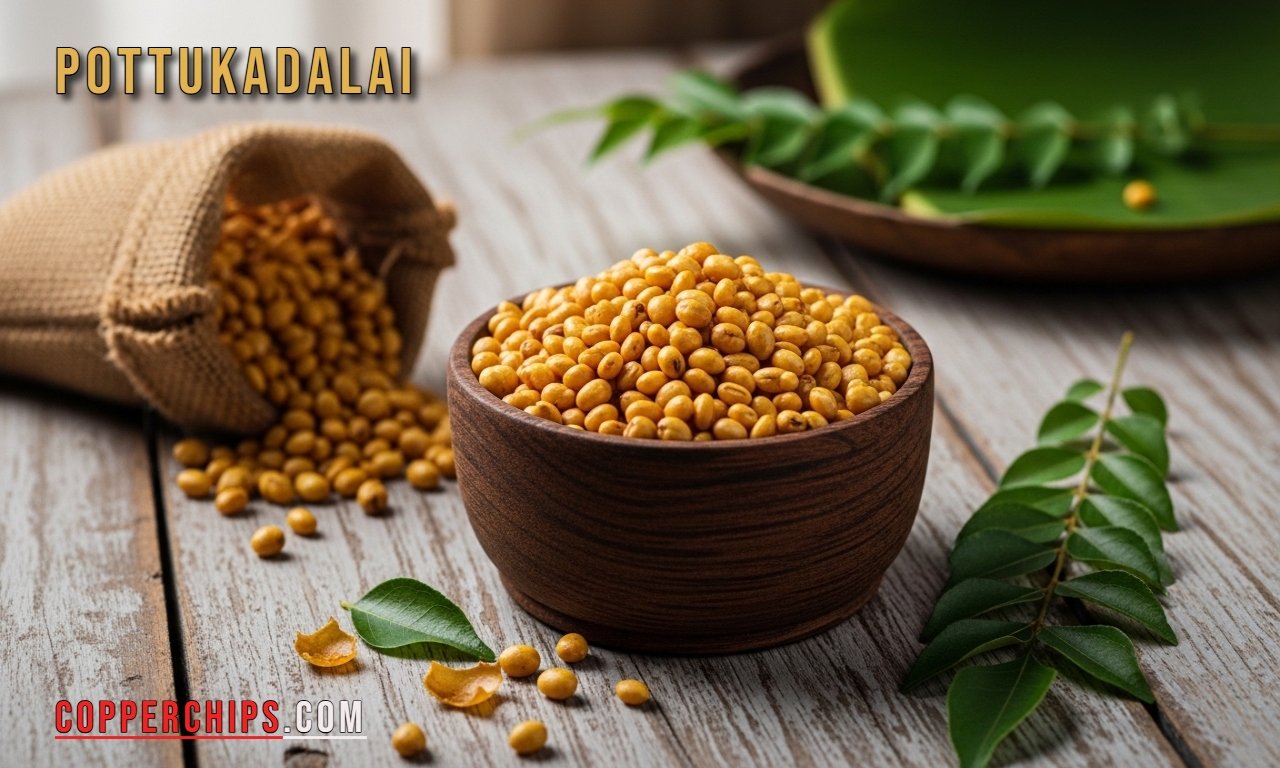
Pottukadalai, commonly known as roasted gram or bhuna chana, is more than just a staple in South Indian pantries. It is a nutritional marvel that has bridged the gap between traditional medicine and modern snacking for centuries. Whether you know it as dalia, hurigale, or fried gram, this humble legume is a testament to the fact that the best health foods aren’t always found in expensive, fancy packaging.
What Exactly is Pottukadalai?
At its core, pottukadalai is Bengal gram (Cicer arietinum) that has been soaked, dried, and then dry-roasted until it achieves a signature crunch and a light, nutty flavor. Unlike raw chickpeas, the roasting process removes the moisture and alters the starch structure, making it easier to digest and giving it a much longer shelf life.
In the culinary landscape of Tamil Nadu, Kerala, and Karnataka, it serves as a thickening agent, a protein booster, and the primary ingredient in the beloved coconut chutney.
The Nutritional Profile: Small Bean, Big Impact
If you are looking for a plant-based protein source that doesn’t break the bank, look no further. Pottukadalai is packed with essential macronutrients and micronutrients that support various bodily functions.
1. High Protein Content
For vegetarians and vegans, hitting daily protein targets can be a challenge. A 100g serving of roasted gram provides approximately 18–22 grams of protein, making it an excellent post-workout snack or a muscle-building addition to your diet.
2. Dietary Fiber
One of the standout features of pottukadalai is its high fiber content. This includes both soluble and insoluble fiber, which aids in digestion, prevents constipation, and keeps you feeling full for longer periods—a crucial factor for weight management.
3. Essential Minerals
It is rich in:
- Iron: Vital for hemoglobin production and fighting anemia.
- Magnesium: Supports nerve function and bone health.
- Phosphorus: Works with calcium to build strong teeth and bones.
Health Benefits You Can’t Ignore
Integrating pottukadalai into your daily routine offers a wide array of health benefits that go beyond simple satiety.
Blood Sugar Management
Because it has a low Glycemic Index (GI), it releases sugar into the bloodstream slowly. This prevents the “spike and crash” cycle often associated with processed snacks, making it a safe and recommended snack for individuals managing diabetes.
Heart Health
The fiber, potassium, and vitamins found in roasted gram help lower cholesterol levels. By reducing the buildup of LDL (bad) cholesterol in the arteries, pottukadalai supports overall cardiovascular health and reduces the risk of hypertension.
Weight Loss Buddy
If you struggle with “mindless munching,” swapping your potato chips for roasted gram can be a game-changer. The combination of protein and fiber triggers the release of satiety hormones, helping you naturally reduce your calorie intake throughout the day.
Culinary Versatility: From Chutneys to Cookies
While many simply eat it by the handful, pottukadalai is incredibly versatile in the kitchen.
The Classic Chutney
No South Indian breakfast of Idli or Dosa is complete without “The Chutney.” While coconut is the base, pottukadalai provides the creamy texture and structural integrity. Without it, the chutney would be watery and lack that satisfying mouthfeel.
Maladu (Roasted Gram Ladoo)
For those with a sweet tooth, Maladu is a traditional sweet made by grinding roasted gram into a fine powder, mixing it with ghee and sugar (or jaggery), and rolling them into balls. It is one of the healthiest sweets you can offer children, as it provides instant energy and protein.
Thickeners and Coatings
In its powdered form, it acts as a fantastic gluten-free thickening agent for gravies and soups. It is also used to bind koftas or as a coating for fried snacks, providing a crispier texture than standard flour.
Pottukadalai for Different Life Stages
One of the reasons this legume is so revered in Indian households is its suitability for everyone—from toddlers to the elderly.
For Growing Children
Many Indian mothers introduce a fine paste of pottukadalai mixed with milk or warm water as a weaning food. It is gentle on the stomach and provides the amino acids necessary for physical growth and cognitive development.
For Expecting Mothers
The folate and iron content in roasted gram are essential during pregnancy. Folate helps prevent neural tube defects, while iron ensures the mother’s energy levels remain stable despite the increased blood volume requirements.
For the Elderly
As digestion slows down with age, heavy legumes can cause gas and bloating. However, because pottukadalai is pre-roasted, it is “pre-digested” to an extent, making it a light yet nutrient-dense option for seniors who need to maintain muscle mass.
Buying and Storing Tips
To get the most out of your pottukadalai, quality matters. When buying, look for:
- Uniformity: The grains should be a consistent pale yellow.
- Texture: They should be crisp, not soft or chewy (which indicates moisture absorption).
- Storage: Store them in an airtight glass or steel container. If they lose their crunch, a quick 30-second dry roast in a pan will revive them instantly.
Sustainability and Economy
In an era where “superfoods” like quinoa and chia seeds are imported at high costs, pottukadalai stands out as an eco-friendly and economical alternative. It requires relatively little water to grow compared to other crops and has a low carbon footprint because it is processed locally in many regions. Choosing this snack isn’t just good for your body; it’s good for your wallet and the planet.
Conclusion
The humble pottukadalai proves that nutrition doesn’t have to be complicated or expensive. It is a powerhouse of protein, a champion of heart health, and a versatile culinary tool that deserves a permanent spot in your kitchen. Whether you’re tossing it into a salad for an extra crunch or blending it into a traditional sweet, you are tapping into a legacy of wellness that has sustained generations.
Next time you’re reaching for a snack, skip the processed aisle and go for a handful of roasted gram. Your body will thank you for the clean, sustained energy that only a true whole food can provide.