Maintaining a healthy mouth is essential, even when relying on dental solutions to replace missing teeth. Proper oral hygiene supports overall health, prevents gum disease, and helps ensure that any replacements remain effective. Daily habits like brushing, flossing, and regular dental check-ups remain important, as the surrounding gums and natural teeth require consistent care. Adapting these routines to accommodate tooth replacement can make a meaningful difference in long-term oral health.
For those who use dentures, integrating them into a daily care routine is key. Thoroughly cleaning dentures, removing food particles, and gently caring for the gums help prevent irritation or infection. Regular dental visits ensure proper fit and function, supporting comfort and oral wellness. By combining routine oral hygiene with careful denture maintenance, individuals can effectively protect both their natural tissues and their tooth replacements, preserving overall oral health.
Daily Oral Hygiene Practices
Establishing a daily oral hygiene regimen is crucial for anyone using tooth replacements. Brush thoroughly with a soft-bristled toothbrush at least twice a day. Take care to gently brush around all surfaces, especially near the gums and the margins of any prosthetic devices. Regular flossing with specialized floss or interdental brushes helps remove debris and plaque buildup, which can prevent infections around implants and bridges. Using an antimicrobial mouthwash further reduces harmful bacteria, minimizing the risk of inflammation and prolonging the health of both natural tissue and prosthetic components.
Regular Dental Check-Ups
Regular visits to your dentist are essential for keeping your tooth replacements in excellent condition. Dentists can monitor your oral health and the condition of your replacement teeth, helping detect and address early issues such as gum recession, implant loosening, or prosthetic wear. Professional dental cleanings, performed during these visits, are critical because they target stubborn deposits that cannot be removed by daily brushing or flossing. Maintaining this schedule helps you avoid more significant and costly dental problems in the future.
Dietary Considerations
Your diet directly impacts the durability and performance of your tooth replacements. Minimize sugary foods and beverages, as they promote plaque formation and bacterial growth, increasing the risk of problems for both prosthetic and natural teeth. Acidic foods and drinks should also be limited, as they can contribute to the erosion of tooth and prosthetic surfaces. To combat these effects, rinse your mouth with water after eating or drinking anything acidic or sugary. Drinking plenty of water throughout the day not only helps keep oral tissues hydrated but also stimulates saliva production, which naturally defends against cavity-causing bacteria.
Proper Care for Different Tooth Replacements
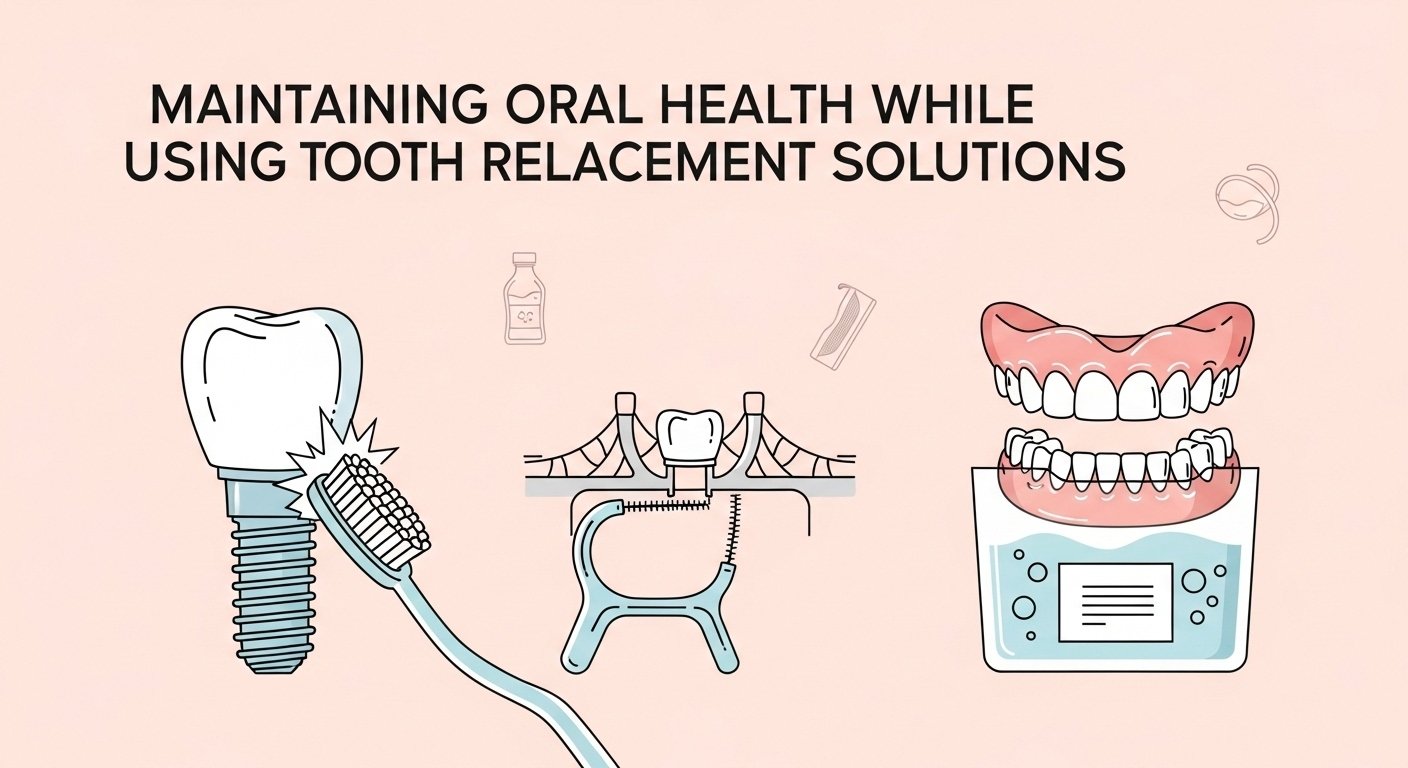
Various tooth-replacement options require tailored care routines. For removable dentures, daily cleaning with a denture brush and soaking them overnight in a cleansing solution helps maintain their cleanliness and shape. If you have dental implants, focus on cleaning around the implant posts with dedicated brushes or floss to prevent peri-implantitis, a type of inflammation similar to gum disease. Dental bridges require specialized threaders to reach hard-to-reach areas and keep the gum line clean. Always follow your dentist’s instructions for your specific devices for the best results.
Managing Dry Mouth
Dry mouth is a common complaint among adults, especially when taking certain medications or managing certain health conditions. Saliva is the mouth’s key defense against decay and irritation because it rinses away food debris and acids. To reduce the risks linked with dry mouth, stay well hydrated and chew sugar-free gum to help stimulate saliva flow. Discuss saliva substitutes or prescription therapies with your dental provider if symptoms persist or worsen, especially if you experience discomfort with your tooth replacements.
Avoiding Harmful Habits
Common habits can put tooth replacements at risk if not changed. Avoid biting or chewing on hard objects, such as ice, pens, or fingernails, to prevent chips, cracks, or displacement of your dental prosthetics. Refrain from using your teeth as tools, such as opening packages, to maintain their structural integrity. Most importantly, avoid tobacco use, as it significantly reduces blood flow to the gums, slows healing, and compromises the long-term success of dental implants and other replacement options. Non-smoking and proper use increase the longevity of your oral solutions. For further evidence, refer to research highlighted by the Centers for Disease Control and Prevention on tobacco and gum health.
Recognizing Signs of Complications
Monitor for warning signs that may indicate problems with your dental prosthetics or your overall oral health. Persistent discomfort, swelling, unusual odors, altered fit of your dentures or bridges, or bleeding around the gums should never be ignored. Quick evaluation and treatment by your dentist can prevent small complications from becoming larger health problems and can help preserve the effectiveness and comfort of your tooth replacements over time.
Conclusion
Proper care and vigilant monitoring are essential for individuals with tooth replacements. By adhering to a thoughtful oral hygiene routine, making smart dietary decisions, avoiding damaging habits, and staying alert to changes in your oral condition, you will ensure your dental prosthetics last as long as possible. Commit to these best practices to protect your investment and enjoy a healthy, confident smile year after year.