



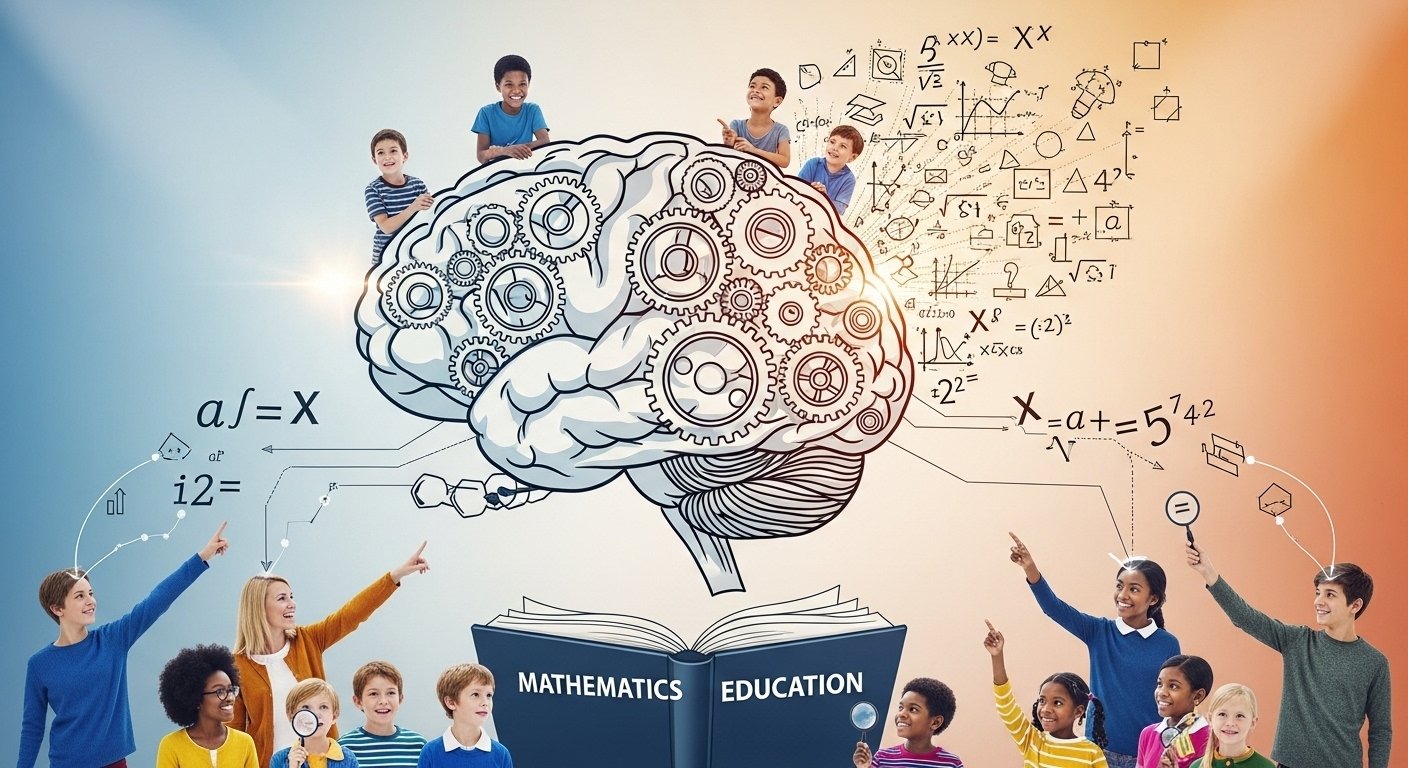
Mathematics serves as a foundation for logical reasoning, problem-solving, and evidence-based judgment. Beyond being a core academic discipline, mathematics is a tool empowering students to analyze situations, make decisions, and approach challenges with confidence. In a world driven by technology and data, the ability to think critically is highly valued across professions and industries. Developing those skills begins in the classroom and continues throughout life, influencing personal, civic, and professional success. Pursuing a Mathematics Education Degree (Secondary) is one path not only to deepen mathematical skills but also to learn best practices for fostering critical thinking among future learners.
Equipping students with mathematical proficiency does more than prepare them for tests or technical work. It nurtures capabilities essential for adapting to rapidly evolving societal and professional landscapes. In today’s global economy, the ability to interpret data, assess risks, and make informed choices is paramount. As global challenges increasingly require analytical solutions, mathematics education emerges as a key driver in shaping individuals who can reason clearly, question constructs, and generate innovative ideas.
By prioritizing the development of critical thinking, mathematics educators can transform classrooms into hubs of inquiry, discovery, and real-world application. These efforts build resilient problem-solvers who are prepared for both academic pursuits and practical life decisions. They also lay the groundwork for developing lifelong learners who will continue to approach problems thoughtfully and resourcefully long after formal schooling is complete.
The Role of Mathematics in Critical Thinking
Mathematics is inherently designed to challenge the mind. Each problem presents an opportunity to analyze claims, assess evidence, and make logical deductions. When students tackle equations or proofs, they practice breaking complex ideas into manageable parts and systematically test and refine their reasoning. This analytic approach is at the core of critical thinking and helps foster a mindset of curiosity and skepticism.
Research has shown that proficiency in mathematics correlates strongly with higher-order thinking skills, including the capacity to evaluate arguments and solve non-routine problems. For example, a 2020 study published by the American Educational Research Association found that students engaged in thoughtful, process-oriented problem-solving exhibit marked improvement in both logical reasoning and independent analysis. This deep engagement helps students to become adaptable thinkers, capable of approaching unfamiliar problems with creativity and resilience.
Real-World Applications Enhancing Analytical Skills
Mathematics can appear abstract when separated from practical experiences. However, connecting curriculum content to real-world issues brings mathematics to life and motivates learners. Students may explore financial mathematics to develop personal budgeting skills or use probability to assess risk in everyday decisions. These connections show students the practical power of mathematical reasoning in their own lives, increasing engagement and retention.
Practical examples, such as analyzing graphical data to interpret trends in scientific or social research, help learners see the relevance of math beyond the classroom. Whether examining climate change data, interpreting statistics in the news, or planning for a future career, these experiences not only strengthen numerical proficiency but also foster the habit of analytical thinking that is directly applicable to new and unfamiliar contexts.
Inquiry-Based Learning as a Tool for Deeper Understanding
Inquiry-based learning empowers students to direct their educational journey. Rather than simply memorizing formulas, learners are encouraged to pose questions, formulate hypotheses, and test their understanding through exploration. This approach to teaching mathematics prioritizes curiosity, reflection, and flexibility in thinking. It places the student at the center of the learning process and celebrates the act of discovery.
Benefits of Inquiry-Based Learning
- Encourages persistence in problem-solving, helping students overcome obstacles and learn from missteps. The process of grappling with challenges builds grit and resilience, tools valuable in math and other disciplines.
- Promotes collaboration as learners discuss multiple pathways to solutions and consider alternate viewpoints. Classroom discussions cultivate respect for diverse approaches and enhance communication skills critical for teamwork.
- Builds lasting conceptual understanding that transcends rote memorization and isolated skills, enabling students to make deeper connections between different mathematical ideas and disciplines.
Studies have demonstrated that students engaged in inquiry-based math instruction are better equipped to transfer their reasoning to novel scenarios, a hallmark of true critical thinking. When students practice justifying their answers and defending their reasoning, their cognitive flexibility and analytical skills deepen even further.
Educators’ Impact on Students’ Critical Thinking Development
The influence of educators is central to cultivating a critical thinking mindset. Teachers who model analytical approaches, pose open-ended questions, and foster respectful debates help students view mathematics as an exploration, not just a destination. Teachers can spark curiosity through real-world problems and encourage students to ask their own questions rather than simply seeking “the right answer.”
Fostering a Growth Mindset
Educators can create classroom environments where mistakes are seen as opportunities for learning, and intellectual risk-taking is encouraged. By scaffolding support and gradually increasing task complexity, teachers empower all students to stretch beyond their comfort zones. Mistakes are viewed as natural parts of the learning process, shifting the focus from fear of failure to a mindset of perseverance and improvement.
Professional development and ongoing training ensure that teachers stay current with innovative instructional strategies, maximizing their impact on learners’ critical thinking capacities. When teachers themselves are engaged in lifelong learning, they model these values for their students, creating a ripple effect that nurtures critical thinking school-wide.
Challenges in Implementing Effective Mathematics Education
While the merits of robust mathematics education are clear, realizing these goals often presents practical challenges. Curricula may lag behind advances in technology or shifts in workforce needs. Schools may also face limited funding and inadequate access to teaching resources, making it difficult to provide hands-on learning opportunities for all students. Disparities in resources can lead to gaps in achievement and opportunity, especially in under-resourced communities.
Furthermore, standardized testing pressures often incentivize memorization over genuine understanding, detracting from efforts to foster critical thinking. Teachers might feel constrained by strict pacing guides or rigid curricula, limiting time for exploration and discussion. Addressing these barriers calls for systemic reform, targeted investment, and a commitment to equity and best practices. Emphasizing professional development for educators and ensuring all students have access to high-quality materials are vital steps in bridging these gaps.
Future Directions in Mathematics Education
Looking ahead, the future of mathematics education is being shaped by advances in digital technology and personalized instruction. Adaptive learning platforms, data-driven feedback, and collaborative digital environments promise to make mathematics accessible and relevant to diverse student groups. These technologies offer individualized feedback, enabling students to progress at their own pace while mastering critical concepts.
The trend toward integrating project-based learning and interdisciplinary tasks underscores the need for a curriculum that mirrors real-world challenges. Preparing students to thrive in a complex, global society requires regular opportunities for them to practice analysis, synthesis, and creative thinking through mathematics. Programs emphasizing real-world connections and collaborative problem-solving prepare students for a rapidly changing world, supporting their growth as both scholars and citizens.
Final Thoughts
Mathematics education stands as a crucial element in developing the next generation of critical thinkers. By bridging theory with practice, fostering inquiry, and adapting to evolving societal demands. Educators equip students with tools essential for lifelong learning and responsible citizenship. As emphasis continues to shift toward deeper understanding and practical application, mathematics classrooms can become incubators of creativity, adaptability, and innovation. With the right support and forward-thinking approaches, mathematics education will continue to unlock human potential and benefit society at large.