



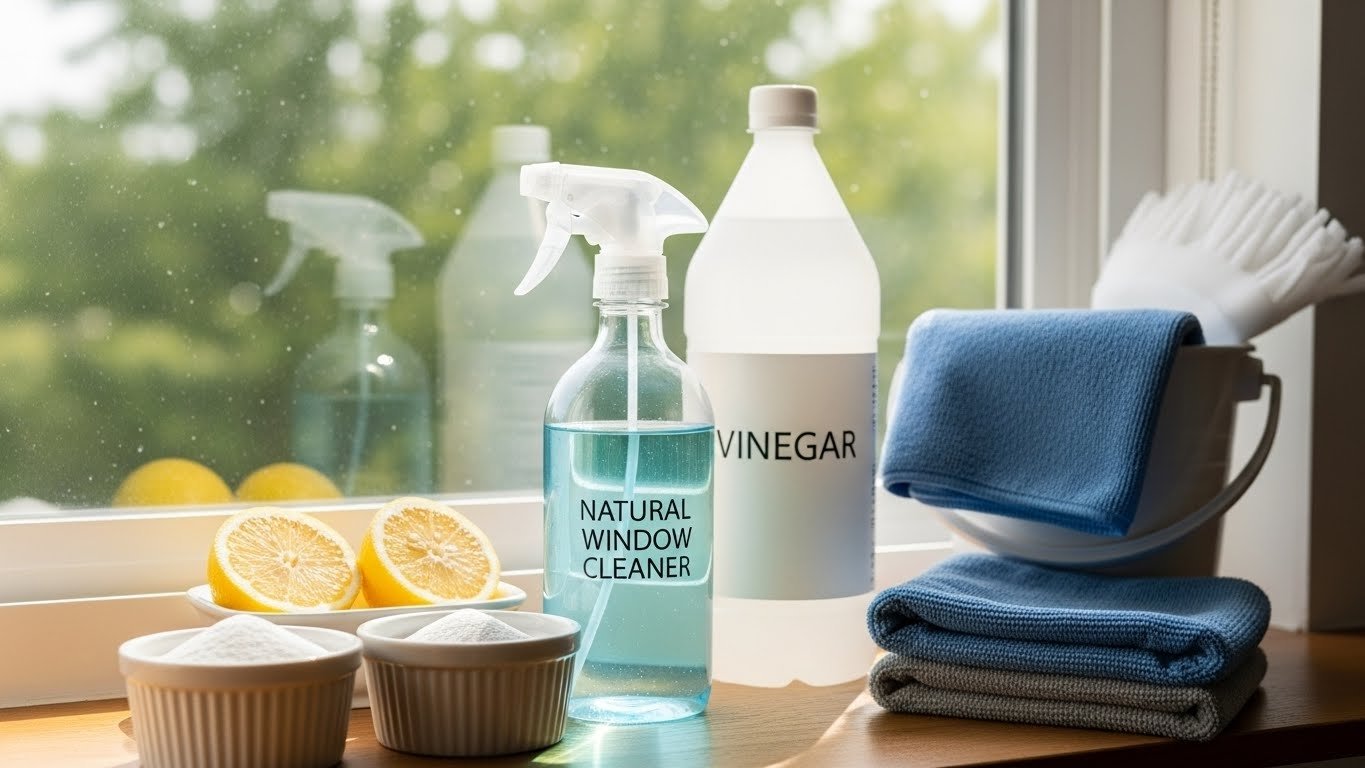
The gentle clarity of polished glass can lift a whole room, especially when sunlight moves across it and brightens every corner.
Many households reach for strong detergents, yet there’s something reassuring about choosing methods that feel kinder to the home and gentler to the environment.
A calm routine can bring a natural shine that lasts without relying on harsh solutions.
Choosing Safer Ways to Care for Your Glass
Many traditional cleaners rely on ingredients that irritate the skin and eyes, which is why a softer approach can feel more pleasant.
Natural mixtures work surprisingly well because they remove residues without filling the air with sharp odours. They also help keep everyday routines simple because most ingredients already sit in the kitchen.
Using alternatives made from familiar staples supports healthier living spaces, which is especially important in rooms used by children or pets. The absence of chemical vapours helps windows feel fresher after each cleaning, which improves comfort throughout the day.
There’s also a quiet sense of ease when cleaning becomes something gentle rather than something harsh.
Environmentally minded households often appreciate these methods because they reduce plastic waste. Reusable bottles and cloths take the place of disposable products, which lowers the amount of packaging that ends up in bins.
As fewer chemicals reach local waterways, wildlife benefits, and nearby habitats keep a steadier balance. These choices create a responsible pattern throughout the home and encourage long-lasting habits.
Gathering the Tools That Make the Work Easier
Simple tools can transform the experience of cleaning glass. Soft microfibre cloths remove dust with very little effort because their fibres catch small particles before they scatter across the surface.
These cloths also prevent the friction that creates streaks, which leaves the glass smoother and clearer. Many households find that keeping a small set of cloths makes the task more organised.
A well-sized squeegee helps the work move along with steady progress. Each stroke removes water in one complete movement, which stops drying marks from forming.
A gentle sponge or soft brush can help before this stage, especially when stubborn grime needs a light touch rather than strong pressure.
When the tools feel comfortable in the hand, the whole routine becomes more enjoyable.
Reusable spray bottles allow homemade mixtures to stay fresh and easy to apply. Bottles with reliable lids keep each solution stable for longer. These small preparations encourage a more organised rhythm and provide a calmer atmosphere.
Creating Homemade Cleaners With Everyday Ingredients
Many households rely on simple mixtures because they offer consistent results without harsh chemicals.
A solution of equal parts water and vinegar is often the most reliable because vinegar has a mild acidic quality that dissolves residue quickly.
Once sprayed on the glass, it works well with a microfibre cloth that lifts the loosened dirt. A few drops of essential oil soften the scent and make the routine more pleasant.
A paste made with baking soda and water is useful when facing patches of tougher grime. Baking soda has a slight texture that lifts debris without scratching glass, which makes it useful on panes exposed to dust, pollen or coastal air.
Working in circular movements with a damp sponge creates a gentle lather that rinses clean before drying the surface.
Cornflour mixed with warm water creates another effective cleaner. A spoonful in a litre of water produces a smooth liquid that clings lightly to the surface. The grains bind with fingerprints and grease, which helps the cloth leave a clear shine.
These mixtures feel reassuring because they rely on everyday items rather than eye-watering chemicals.
Using Techniques That Prevent Streaks
Timing makes a noticeable difference when aiming for a streak-free result. Cleaning windows when the sun is high often causes liquids to dry too quickly, which leaves faint marks behind.
Early mornings or late afternoons are usually kinder times because the light is softer and the air cooler. Selecting these calmer moments helps create a more even finish.
The pattern of movement also shapes the final result. Cleaning the inside of the glass with vertical strokes and the outside with horizontal strokes helps identify which side any streaks sit on.
This small method streamlines the final touches and avoids unnecessary repetition, which saves time when several panes need attention.
Moisture gathers in corners and along edges, so drying these areas with care prevents lingering marks. A folded cloth reaches these smaller spaces without leaving fibres behind.
When this step becomes part of the routine, every window feels consistently well kept and the brightness of the room improves as light moves through the space.
Caring for Frames, Sills and Outdoor Surfaces
Frames and sills collect dust and soil, and these marks can transfer onto freshly cleaned glass.
Warm water with a little mild washing-up liquid usually works well for these areas. A soft brush lifts dirt from corners and grooves, which prepares the surface for a simple rinse and gentle dry.
Wooden frames require particular care because too much moisture can cause swelling or moulding over time. A lightly damp cloth offers enough moisture to lift grime without soaking the grain.
Once dry, the timber feels smooth and protected, which supports the overall neatness of the window.
Outdoor panes need an extra step because they face rain, soot and debris. Rinsing them with a hose loosens dust before applying a homemade cleaner. After a light scrub, a second rinse prepares the surface for a final dry with a cloth or squeegee.
Rainwater can sometimes help because it carries fewer minerals than tap water and leaves fewer streaks behind.
Hard water marks, often left by sprinklers or hose spray, respond well to undiluted vinegar. Applying it with a cloth dissolves the minerals that cling to the surface. If marks remain, lemon juice provides an alternative because its natural acidity lifts stubborn residue.
A soft rinse with clean water completes the process and prepares the surface for the next stage.
When windows are tall or difficult to reach, some households prefer to hire professionals who specialise in gentle products.
These services often use biodegradable cleaners and careful methods that respect both the property and the surrounding area. This makes expert window washing a practical and reassuring option.
Conclusion
A thoughtful routine helps windows stay bright throughout the year and prevents dust and streaks from becoming a chore.
Gentle ingredients and steady techniques protect both the home and the environment, which creates a healthier space for everyone.
With these methods in place, each room feels clearer, calmer and more welcoming.