


Mortadella is an Italian delicacy that has earned recognition across the world. Known for its rich history and unique taste, mortadella is a type of sausage that has been enjoyed for centuries. While it might appear similar to other processed meats, it stands out due to its distinctive texture and flavor. This article will delve into the history, production process, uses, and global influence of mortadella.
What Is Mortadella?
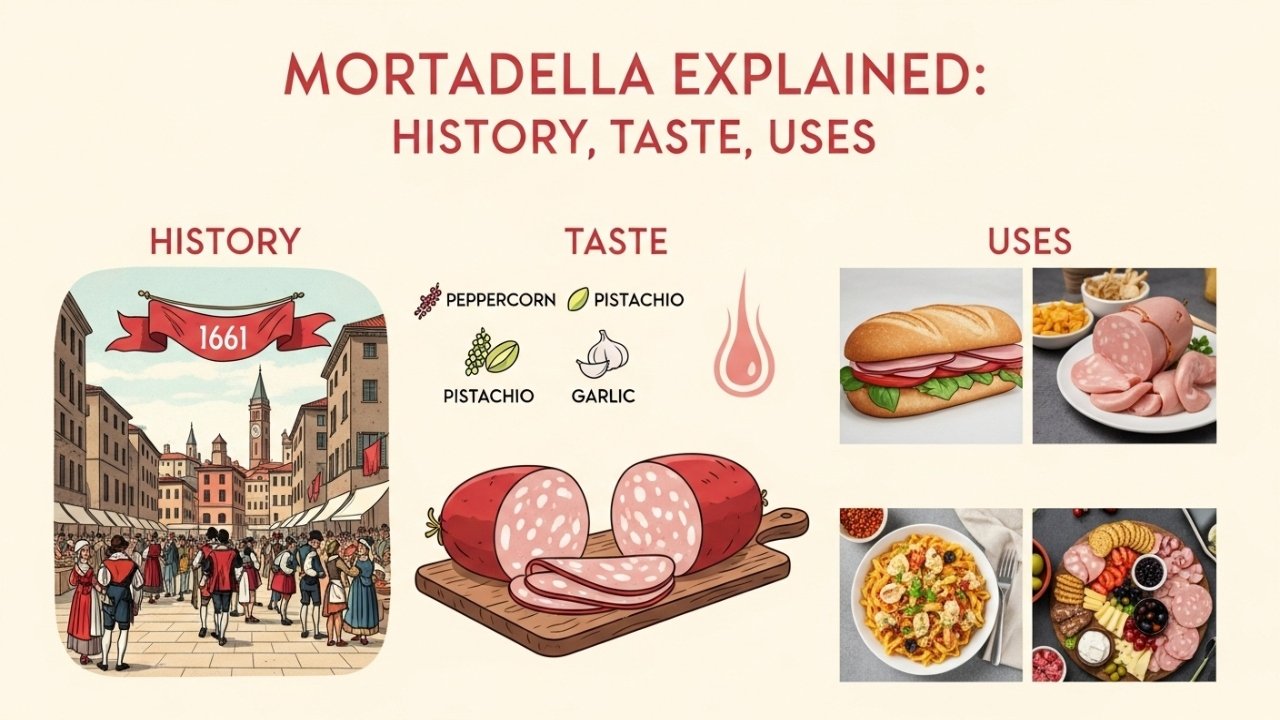
Mortadella is a large, smooth-textured sausage made from finely ground pork, which is often flavored with small cubes of fat, most commonly pork fat. The presence of these fat cubes, which melt during cooking, gives mortadella its signature creamy texture. The sausage is traditionally seasoned with a variety of spices such as pepper, myrtle berries, and pistachios. The addition of these ingredients helps differentiate mortadella from other sausages in both flavor and appearance.
The Origins and History of Mortadella
The origins of mortadella can be traced back to ancient times. Historians believe that it was first created by the Romans, who were known for their culinary ingenuity. However, the modern version of mortadella began to take shape in the Italian region of Emilia-Romagna. This region, renowned for its rich food culture, is the birthplace of many iconic Italian products such as Parma ham and balsamic vinegar.
By the Middle Ages, mortadella had become a beloved food item, particularly in the city of Bologna, which is where it earned its name “Mortadella di Bologna.” The use of myrtle berries and pepper as seasoning was common during this time, giving it the distinct flavor profile that it still carries today. Over time, the recipe evolved, incorporating new ingredients like pistachios, which are now considered one of the defining characteristics of the sausage.
How Mortadella Is Made

The production of mortadella involves several intricate steps. It begins with the selection of high-quality pork, which is finely ground to a paste-like consistency. This paste is then mixed with finely chopped pieces of pork fat, which will eventually melt during cooking, giving the sausage its smooth, creamy texture.
Next, spices such as salt, pepper, and other aromatics like garlic and nutmeg are added to the mixture. In traditional recipes, you may find the addition of myrtle berries, which add a slightly sweet and aromatic flavor, as well as pistachios, which offer both texture and a hint of nuttiness. Once the mixture is complete, it is stuffed into a large casing and tied at both ends.
The mortadella is then cooked slowly in a steam bath, a process that helps the flavors meld together and ensures that the fat cubes remain intact without dissolving too much. The sausage is then allowed to cool before being sliced into thin rounds for consumption.
The Different Types of Mortadella
While the traditional recipe remains a favorite, there are variations of mortadella that cater to different tastes and preferences. The addition of pistachios, for example, is a signature feature in many varieties of mortadella, though not all types include these nuts. In some regions, it is possible to find mortadella with truffle. A luxurious addition that adds depth and complexity to the flavor profile.
In addition to traditional pork-based mortadella, there are also versions made from other types of meat, such as beef or chicken, for those who prefer alternatives. Vegan and vegetarian options have also been created, using plant-based ingredients to mimic the texture and flavor of traditional mortadella.
Mortadella in Italian Cuisine

Mortadella plays a central role in Italian cuisine, often served as an appetizer or part of an antipasto platter. Its versatility allows it to be enjoyed in a variety of ways, including as a sandwich filling or sliced and paired with cheeses and olives. In Italy, it is also commonly used in pasta dishes. Where it can be sautéed with other ingredients like onions and herbs to create a flavorful sauce.
One of the most iconic ways to enjoy mortadella is in the famous “panino con mortadella,” a simple sandwich made with fresh bread, mortadella, and perhaps a few complementary ingredients like arugula or cheese. This humble sandwich is a popular choice for lunch in Italy and beyond.
Mortadella and the Global Market
While mortadella originated in Italy, its popularity has spread far beyond its borders. Today, mortadella is enjoyed in many parts of the world, from Europe to the Americas, and even in parts of Asia. In the United States, it is commonly found in delicatessens and is often used as a filling in sandwiches. The American version of mortadella may sometimes be called “baloney,” although the two are distinct products. Baloney is typically made from less expensive cuts of meat and lacks the flavor complexity and texture of mortadella.
In other parts of Europe, mortadella has become a beloved ingredient in regional dishes. In France, it is often featured in charcuterie platters, while in Spain, it may be included in tapas spreads. Its influence is not limited to savory dishes, as it is sometimes incorporated into pastries and other baked goods for a unique twist.
Health Benefits of Mortadella
Despite its reputation as a processed meat, mortadella does offer some nutritional benefits. It is a good source of protein, which is essential for muscle repair and overall body function. It also contains a variety of vitamins and minerals, including B vitamins, which support energy production, and iron, which is crucial for healthy blood circulation.
However, as with most processed meats, mortadella should be enjoyed in moderation. It is high in fat and sodium, which can contribute to health issues such as high blood pressure and heart disease when consumed in excess. Therefore, it is recommended to balance its consumption with a healthy, well-rounded diet.
Mortadella’s Influence in Popular Culture
The influence of mortadella extends beyond the culinary world. In recent years, the sausage has been referenced in films, literature, and even art. Its status as a symbol of Italian culinary heritage has made it an iconic food product, often evoking nostalgia for Italy’s rich food culture.
In Italy, the mortadella is a source of regional pride, with many cities and towns claiming to have the best version. Festivals dedicated to mortadella, such as the “Festa della Mortadella” in Bologna, attract food lovers from all over the world. During these events, visitors can sample different varieties of the sausage and learn more about its history and production methods.
Conclusion
Mortadella is a food that has stood the test of time. From its Roman origins to its status as a beloved part of Italian culinary culture, it continues to be enjoyed in a variety of ways. Whether served on a sandwich, incorporated into a pasta dish, or simply enjoyed on its own. Mortadella offers a unique flavor experience that reflects the history and traditions of Italy.
Today, mortadella is enjoyed globally, from the streets of Bologna to delicatessens in New York City. Its versatility ensures that it will remain a favorite for years to come. Its rich flavor, creamy texture, and historical significance make it much more than just a simple sausage. Mortadella is a culinary treasure that connects people across cultures and generations, reminding us of the importance of food in bringing people together.