


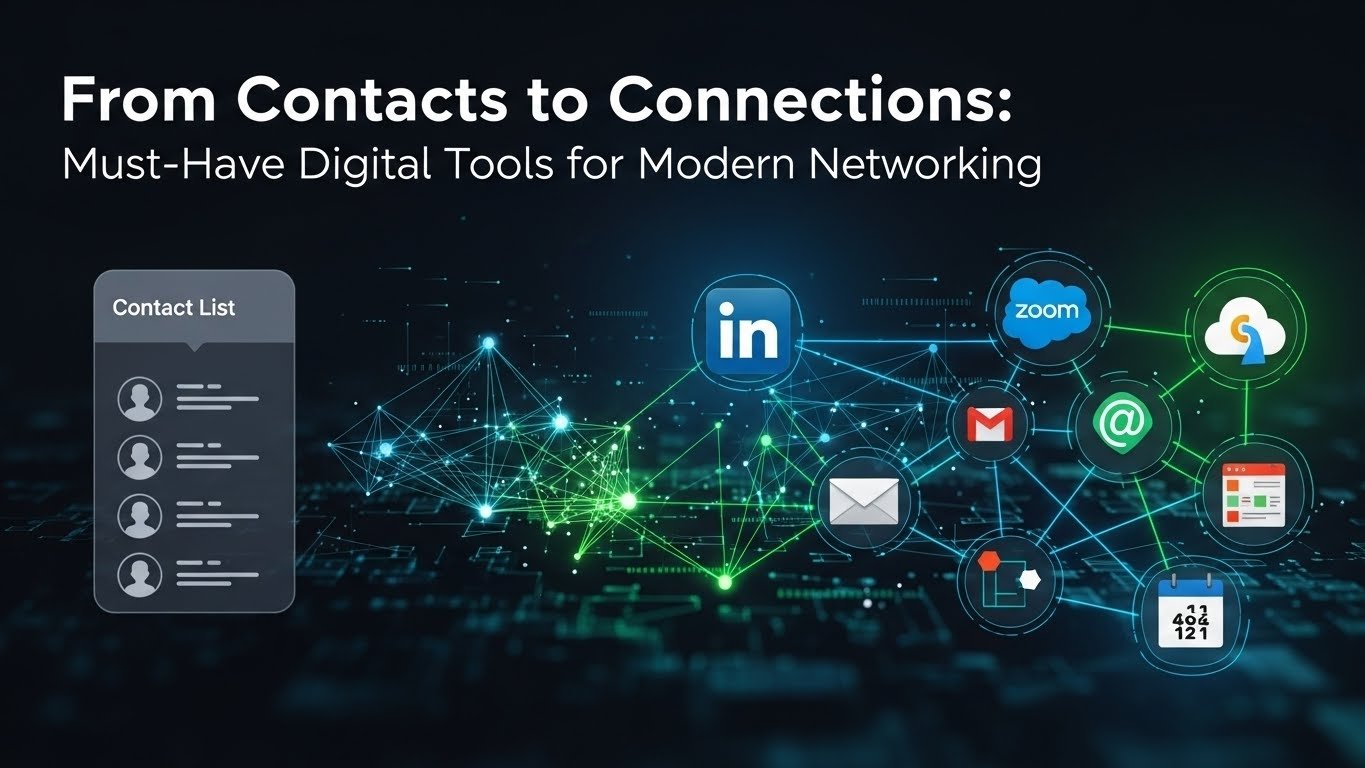
Networking has moved far beyond handshakes and business cards. In today’s hybrid professional world, opportunities emerge in Slack channels, LinkedIn DMs, virtual conferences, and collaborative platforms powered by AI. The challenge? Managing connections, follow-ups, and personal branding across multiple platforms. The solution lies in leveraging digital tools designed not just to connect you—but to help you stay remembered.
Below is a curated list of the most effective digital tools to enhance, automate, and personalize your professional networking strategy.
LinkedIn: The Networking Powerhouse
LinkedIn remains the foundation of modern professional networking. It’s more than an online résumé; it’s a dynamic ecosystem for connecting with peers, joining industry groups, and sharing thought leadership content.
How to maximize it:
- Optimize your profile headline and summary for your niche keywords.
- Use the “Creator Mode” to publish content that builds authority.
- Set reminders with LinkedIn’s “Relationship Notes” feature for follow-ups.
- Engage meaningfully in discussions—consistency builds recall.
Pro tip: Join smaller, niche groups relevant to your field; engagement in targeted communities drives deeper connections than mass outreach.
Calendly: Simplify Scheduling for Real Conversations
Networking often fails because meetings never happen. Calendly eliminates the endless email ping-pong when scheduling chats.
Why it works:
- Syncs with Google, Outlook, and iCloud calendars to prevent double-booking.
- Allows you to share customized meeting links for specific contexts (“Coffee Chat,” “Networking Call,” “Partnership Discussion”).
- Integrates seamlessly with Zoom and Google Meet.
Best use: After connecting on LinkedIn or meeting at an event, send a short message: “Here’s an easy way to find a time that works best for you,” followed by your Calendly link.
Notion: Build Your Personal CRM for Networking
Notion has evolved into a powerful workspace to manage professional relationships.
How to use it:
- Create a “Networking Dashboard” that tracks names, companies, last contact dates, and follow-up actions.
- Embed LinkedIn profile links, notes from conversations, and shared documents.
- Use Notion’s “Relations” and “Rollups” to connect your contacts with ongoing projects or opportunities.
Unique Tip: Add a “Reciprocity Tracker” — a simple checkbox to remind you to give as much as you receive in your professional relationships.
Airmeet: Humanizing Virtual Networking
Airmeet has become a go-to platform for hosting interactive virtual events that feel more like real conferences.
Key features:
- Virtual “Tables” that mimic in-person roundtable discussions.
- Built-in Q&A and live reaction tools for audience engagement.
- Integrates with LinkedIn and CRMs for post-event follow-up.
When to use: If you organize webinars, workshops, or industry panels, Airmeet helps participants network naturally through conversation-based events.
HubSpot CRM: The Networking Engine for Growth
HubSpot CRM isn’t just for sales—it’s also a powerful networking companion for business professionals, entrepreneurs, and consultants.
Core benefits:
- Automatically tracks conversations across email and LinkedIn.
- Logs interactions and reminds you when it’s time to reconnect.
- Provides pipeline-style visibility—see which relationships need nurturing.
Pro tip: Use HubSpot’s free plan to manage personal contacts and transition them into collaborative or referral partnerships over time.
Slack: Your Real-Time Professional Community Hub
Slack has become an essential tool for micro-networking within niche communities. Many top industry networks (like Product Marketing Alliance and Women in AI) run exclusive Slack spaces.
Why it matters:
- Instant collaboration fosters deeper relationships.
- Topic-based channels allow you to focus your participation where it matters.
- Integrations with Notion, Trello, and Google Drive help you co-create with new contacts instantly.
Networking insight: Treat Slack as a conversation ecosystem. The best connections often come from consistent, helpful interactions in topic channels.
AI-Powered Networking Assistants
AI assistants like Clay, Dex, and Fabric are redefining relationship management. They automatically organize your contacts, remind you when to follow up, and even draft personalized messages.
Key strengths:
- Aggregates contacts from email, social platforms, and meetings.
- Uses AI to identify shared interests or timely conversation triggers (e.g., birthdays, job changes).
- Helps you re-engage dormant connections with tailored context.
Example: Clay identifies a past collaborator who just changed roles—your AI assistant drafts a congratulatory note, and you reconnect effortlessly.
🧰 FAQ: Your Networking Toolkit in Action
Before diving in, remember: Networking is about reciprocity and visibility—these tools simply scale your ability to show up consistently.
Q1: What’s the best way to organize contacts from multiple sources?
Use Notion or Clay to centralize your network. They connect your email, calendar, and social profiles into one searchable database.
Q2: How do I personalize follow-ups without sounding robotic?
Tools like HubSpot CRM and Dex allow you to store personal notes (e.g., “Met at SXSW—discussed podcasting trends”). Reference these details in future follow-ups to create genuine continuity.
Q3: I want to host networking events. Which platform should I use?
Airmeet is excellent for interactive virtual events. If you’re planning smaller sessions, pair it with Calendly to manage invites and follow-ups efficiently.
Q4: How can I stay remembered after a digital event?
Create a quick personalized thank-you note using templates in HubSpot CRM or design digital thank-you cards through Adobe Express—its intuitive interface lets you easily create printable invitations or follow-up visuals that stand out in inboxes.
Q5: What’s the future of networking tools?
The future is AI-driven. Expect deeper integration across relationship tools like Clay, CRMs, and event platforms—enabling real-time reminders and contextual suggestions (“You met this founder six months ago; it’s time to reconnect”).
Digital networking isn’t about amassing contacts—it’s about managing context. The most effective professionals use tools that extend human warmth and attention through structure and automation. Whether you’re sending a follow-up via HubSpot, creating memorable visuals through Adobe Express, or tracking introductions in Notion, the end goal remains the same: connection with purpose. In this new era, visibility equals opportunity—and with the right tools, your network becomes not just wider, but smarter, more reciprocal, and infinitely more durable.