



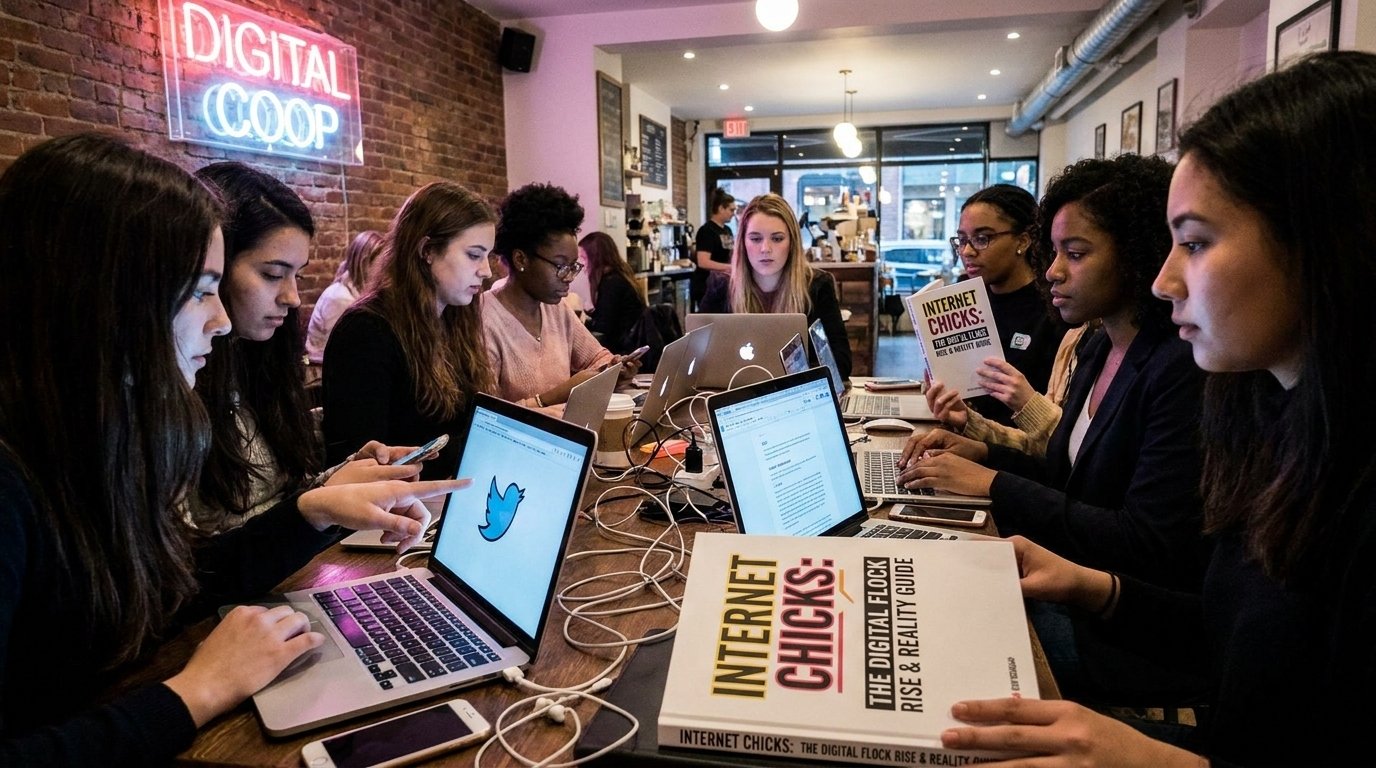
In the sprawling, hyper-connected ecosystem of the modern web, few subcultures are as visible, misunderstood, and impactful as the group colloquially known as “internet chicks.” The term, often tossed around in comment sections, memes, and late-night Twitter debates, carries a weight of stereotype, admiration, and criticism all at once. But to dismiss “internet chicks” as a simple monolith is to miss a profound shift in how a generation of women builds identity, wealth, and community online. This article is a deep dive into the phenomenon: who they are, how they operate, the economy they’ve built, and the psychological reality behind the filtered selfies.
Defining the Term: More Than a Meme
The phrase “internet chicks” is amorphous. For some, it conjures the image of an e-girl with dyed hair, a septum piercing, and a Discord server full of subscribers. For others, it points to the Instagram model sipping a protein shake in a gym mirror, or the TikTok dancer mastering a 15-second choreography. At its core, “internet chicks” refers to women who have turned digital platforms—Instagram, TikTok, Twitch, OnlyFans, X (formerly Twitter), and YouTube—into their primary stage for self-expression, social connection, and often, income generation.
Unlike traditional celebrities who endured gatekeepers (agents, studios, magazine editors), “internet chicks” are self-made avatars of attention. They are creators, curators, and capitalists of their own image. The term can be used affectionately, derisively, or neutrally, but it is inescapably tied to the post-2010 explosion of influencer culture. To understand them, you must first accept that for millions of young women, being an “internet chick” is not a side hobby—it is a career path, a coping mechanism, and a legitimate form of labor.
The Ecosystem: Where They Thrive
The lifeblood of “internet chicks” is platform diversification. No successful digital personality puts all their eggs in one algorithmic basket. The ecosystem works as a funnel:
TikTok and Instagram Reels – The discovery engines. Short, viral clips showcasing dance, humor, beauty, or outrage capture new followers. A single trending audio can launch a new “internet chick” from 500 to 500,000 followers overnight.
Twitch and YouTube – The community hubs. Here, “internet chicks” stream video games, “just chatting” sessions, or reaction content. Donations, subscriptions, and ad revenue flow in, with top creators earning six figures monthly.
OnlyFans and Fansly – The monetization vaults. While not universal, a significant slice of “internet chicks” use adult or semi-adult subscription services to achieve financial independence. The stigma has faded as mainstream media reports on creators buying houses outright.
Linktree and Beacons – The central nervous system. One link in a bio aggregates everything: merchandise, Patreon, Cameo, affiliate codes for skincare or gaming chairs.
A savvy “internet chick” treats each platform like a different sales channel. Instagram is the billboard. TikTok is the free sample. Twitch is the talk show. OnlyFans is the VIP lounge.
The Economy: How “Internet Chicks” Make Millions
Let’s talk numbers, because the financial transformation is staggering. In 2015, calling someone an “internet chick” might have implied she was merely seeking validation. In 2025, it implies she might be a small-business owner with a P&L statement.
Consider the revenue streams:
Ad revenue (YouTube: $3–$5 per 1,000 views for a beauty vlog)
Brand sponsorships (A mid-tier “internet chick” with 200k followers charges $5,000–$15,000 per Instagram post)
Merchandise (hoodies, makeup palettes, energy drinks – margins often exceed 60%)
Digital products (preset Lightroom filters, workout PDFs, e-books on “building your brand”)
Affiliate marketing (Amazon storefronts, beauty codes, VPNs, gaming peripherals)
The top 1% of “internet chicks” earn millions annually. The middle tier—say, 50,000 to 500,000 cross-platform followers—often earns $80,000 to $300,000, outpacing the average US white-collar salary. The long tail, however, fights for scraps. Thousands of “internet chicks” with 5,000 followers grind daily for free products or $50 sponsored tweets.
What’s revolutionary is the direct line from audience to wallet. No agent takes 20%. No producer takes publishing rights. A successful “internet chick” is her own media conglomerate.
The Labor Behind the Lens: Invisible Work
Critics who sneer at “internet chicks” as lazy or untalented have never managed a content calendar. The work is relentless:
Content creation: 3–5 TikToks daily, 1–2 Instagram posts, a 10-minute YouTube essay weekly, plus live streams lasting 4 hours.
Editing: Color grading, audio syncing, jump cuts, captions. Many “internet chicks” learn professional software like Premiere Pro or DaVinci Resolve.
Engagement: Replying to comments, DMs, Discord modding. The algorithm rewards interaction, so ignoring fans means falling into the shadow ban abyss.
Analytics: Studying retention graphs, click-through rates, best posting times. This is data science without the degree.
Appearance labor: Makeup, lighting checks, outfit changes. The “effortless selfie” often requires 45 minutes of setup.
Burnout is endemic. “Internet chicks” talk openly on podcasts about crying between takes, developing carpal tunnel, or suffering from dissociation—the feeling that their online persona has consumed their real self. The glamour is real, but so is the exhaustion.
Psychological Dimensions: Validation, Anonymity, and the Gaze
Why do millions of women choose to become “internet chicks”? The obvious answer is money, but the deeper answer is control. In a physical world where women are often spoken over, ignored, or harassed, the internet offers a curated stage. An “internet chick” controls her lighting, her angle, her narrative. She blocks the trolls. She pins the nice comments.
However, that control is partially illusory. The gaze of thousands of strangers reshapes behavior. Many “internet chicks” report that they no longer know what they truly like—do they actually love oat milk lattes, or did a sponsored post convince them? Does she genuinely enjoy cosplay, or is it just what gets the most Retweets?
Parasocial relationships add another layer. Fans feel genuine intimacy with “internet chicks,” sending heartfelt letters, gifts, or stalkerish threats. The creator must balance being warm enough to foster loyalty but distant enough to avoid danger. Several high-profile “internet chicks” have moved homes after doxxing incidents.
Conversely, some lean into the anonymity. A growing subset of “internet chicks” wears masks, uses voice changers, or never shows their face. They prove that personality, humor, and story can build a following without traditional beauty standards.
The Dark Side: Harassment, Leaks, and Algorithmic Punishment
No article on “internet chicks” is complete without addressing predation. Female creators receive exponentially more hate than male counterparts. For every supportive comment, there are three demanding “show your feet” or “go back to the kitchen.” Many “internet chicks” hire virtual assistants just to filter death threats.
Non-consensual leaks remain a crisis. When private content or past photos surface, platforms are slow to act. The psychological toll is akin to digital assault. Some “internet chicks” have quit entirely after leaks. Others have turned leaks into a brand of resilience, speaking openly about revenge porn legislation.
Algorithms are a second, quieter menace. A “internet chick” who posts a bikini photo might be shadow-banned for “sexual solicitation,” while a male gamer screaming slurs is monetized. Meta and TikTok’s automated moderation is famously inconsistent, often demonetizing female creators for showing shoulders or saying the word “sex” in an educational context.
Community and Sisterhood: The Unexpected Bond
Despite the competition—and it is fierce—genuine solidarity exists among “internet chicks.” Private Discord servers, group chats, and “collab houses” (rented mansions where creators live together to cross-promote) have become modern sororities.
When one “internet chick” is harassed, others often swarm the attacker’s mentions or pool money for her legal fees. When a platform changes its payout structure, veterans publish Google Docs explaining the new rules for free. The stereotype of the catty, backstabbing influencer is often a male projection; in reality, many “internet chicks” recognize that rising tides lift all boats.
The Mainstreaming of the “Internet Chick”
We have now reached a point where the term “internet chick” is losing its sharp edges. Hollywood actresses emulate TikTok makeup tutorials. CNN hires YouTubers as political commentators. The 2024 Presidential campaign courted “internet chicks” for get-out-the-vote TikToks.
In other words, the digital underground has become the mainstream. Your daughter’s favorite “internet chick” might be a climate activist who debates science deniers on X. Your son’s favorite might be a welder who live-streams metalworking. The “internet chick” is no longer a niche deviant but a new archetype of public womanhood.
Conclusion: Looking Past the Filter
To reduce “internet chicks” to a punchline is to miss a tectonic cultural shift. They are entrepreneurs in an era of fractured television, therapists for lonely teens, fashion designers for the fast-fashion cycle, and occasionally, cautionary tales about the price of visibility.
The next time you scroll past a perfectly lit photo or a dancing video, pause. Behind that nine-second loop is a business strategy, a psychological armor, and a human being navigating the most attention-hungry economy in history. “Internet chicks” are not going away. They are evolving. And whether you follow them or block them, they are quietly rewriting the rules of fame, femininity, and work for the digital century.