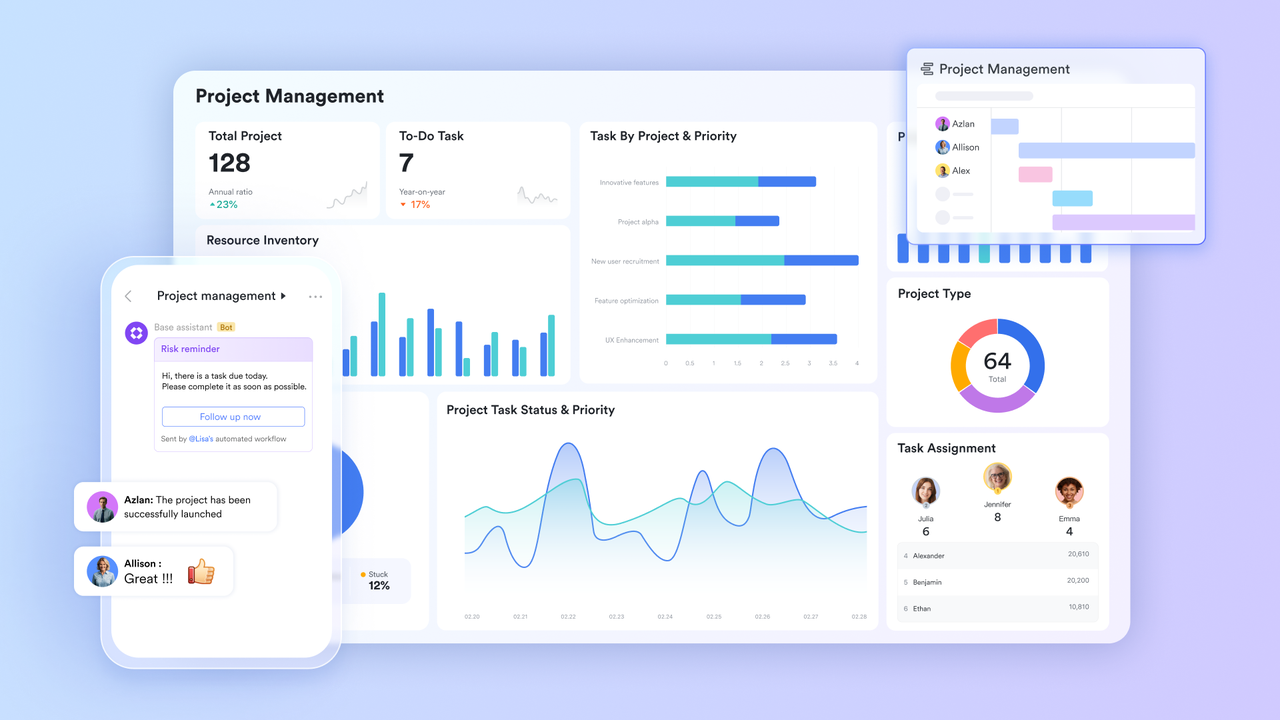
The transition to the cloud is no longer about simple storage; it is about operational synthesis. Leading organizations have realized that having data “in the cloud” is useless if that data remains trapped in disconnected silos. The modern competitive advantage is found in a synchronized environment where every document, chat, and database record communicates in real-time.
By moving away from fragmented legacy systems to unified project management tools like Lark, teams are eliminating the “integration tax”—the wasted time and capital spent on integrating disparate apps. Here is how specific cloud-based functions are redefining productivity in the modern era.
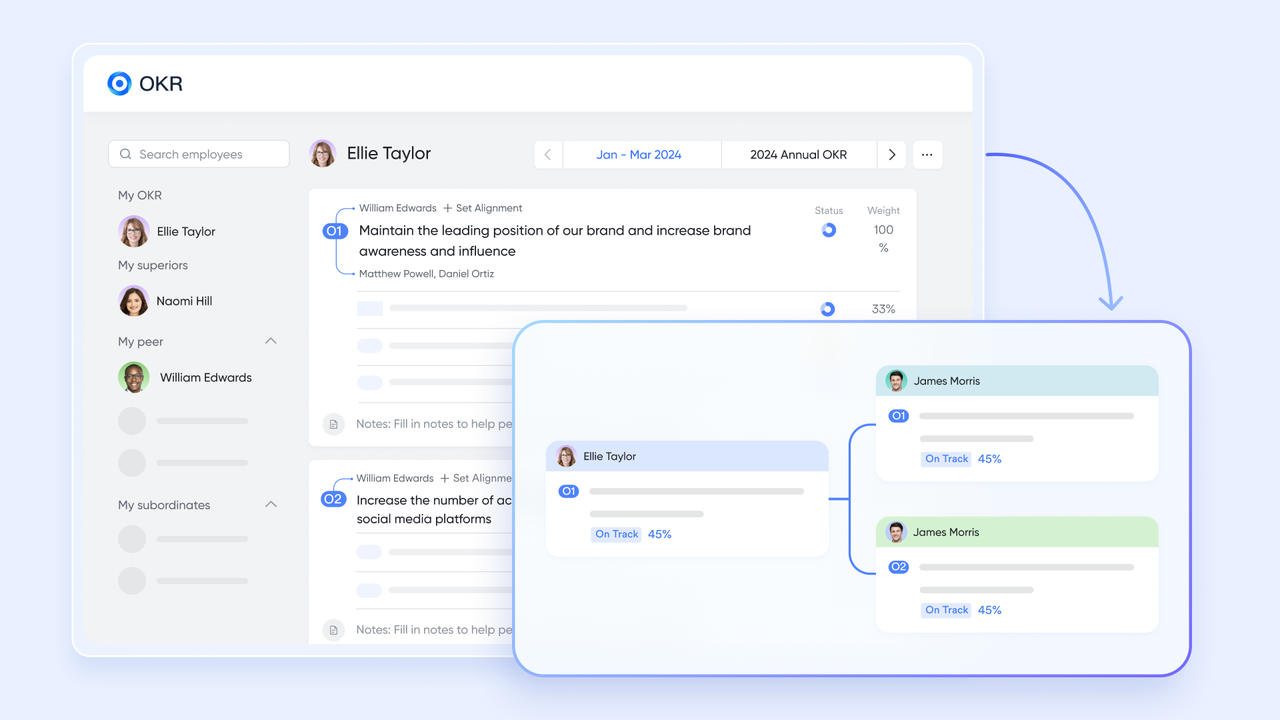
Bridge the strategy-execution gap with Lark OKR
The greatest challenge of scaling is ensuring that 500 people are moving in the same direction as the CEO. Strategy traditionally fails because it is disconnected from the daily “grind.” AI-driven OKRs solve this by creating a live feedback loop between high-level vision and granular execution. Within Lark OKR, the system provides automated progress roll-ups and predictive alerting by monitoring the “velocity” of tasks within the database. If the completion rate of sub-tasks suggests that a high-level Key Result will be missed in three weeks, the AI flags it as “At Risk” today, allowing leaders to ask “How can we help?” rather than “What happened?” This shift from reactive to predictive management ensures that every minute of work is mathematically linked to a company objective, fostering a culture of high accountability where everyone knows exactly how their contribution moves the needle.
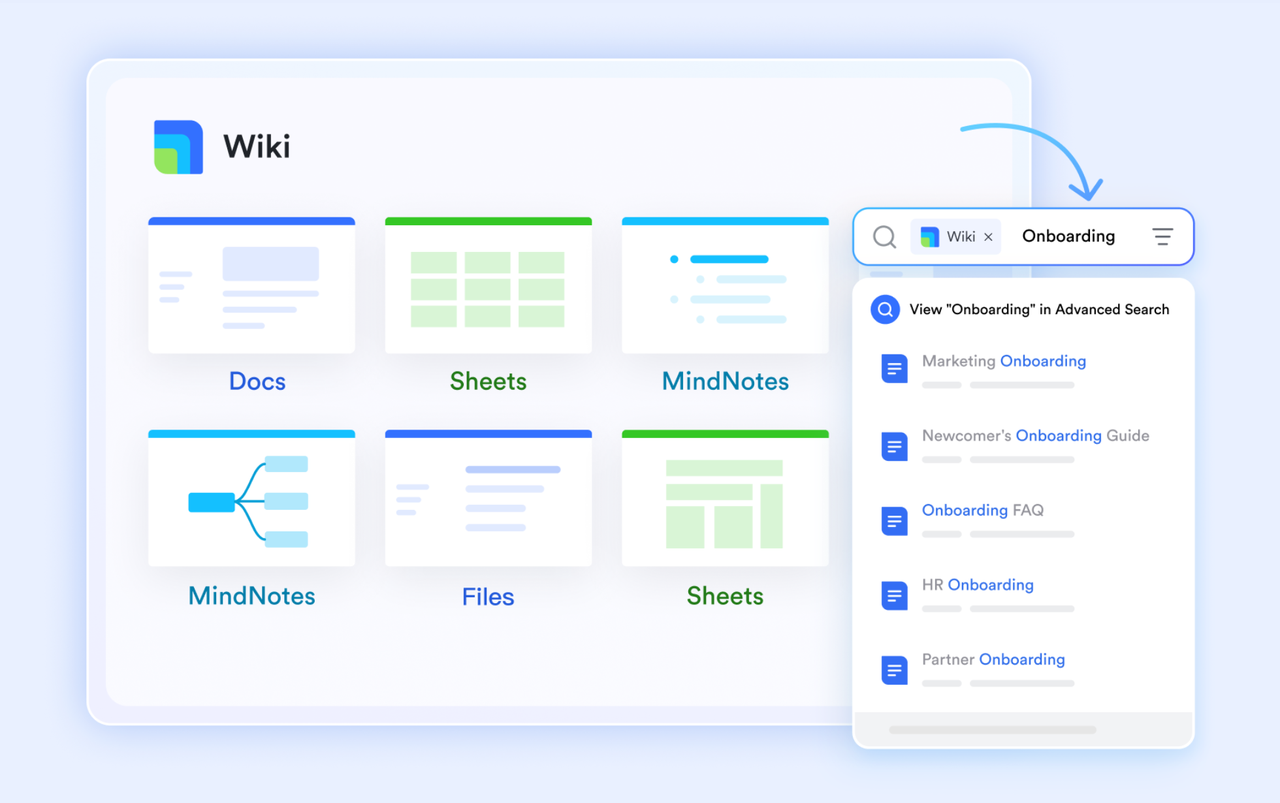
Digitize your institutional brain with Lark Wiki
Institutional memory shouldn’t be buried in private folders or individual hard drives. Lark Wiki serves as a centralized, searchable “digital brain” for the entire organization, ensuring knowledge remains active rather than stagnant. This platform uses semantic AI search to enable employees to ask natural-language questions and receive cited answers directly from the latest SOPs and brand bibles. This drastically reduces “Onboarding Lag,” as new hires become self-sufficient in hours rather than weeks. Firms often find that the reduction in internal support tickets and the preservation of tribal knowledge create a massive long-term ROI that traditional suites simply cannot match.
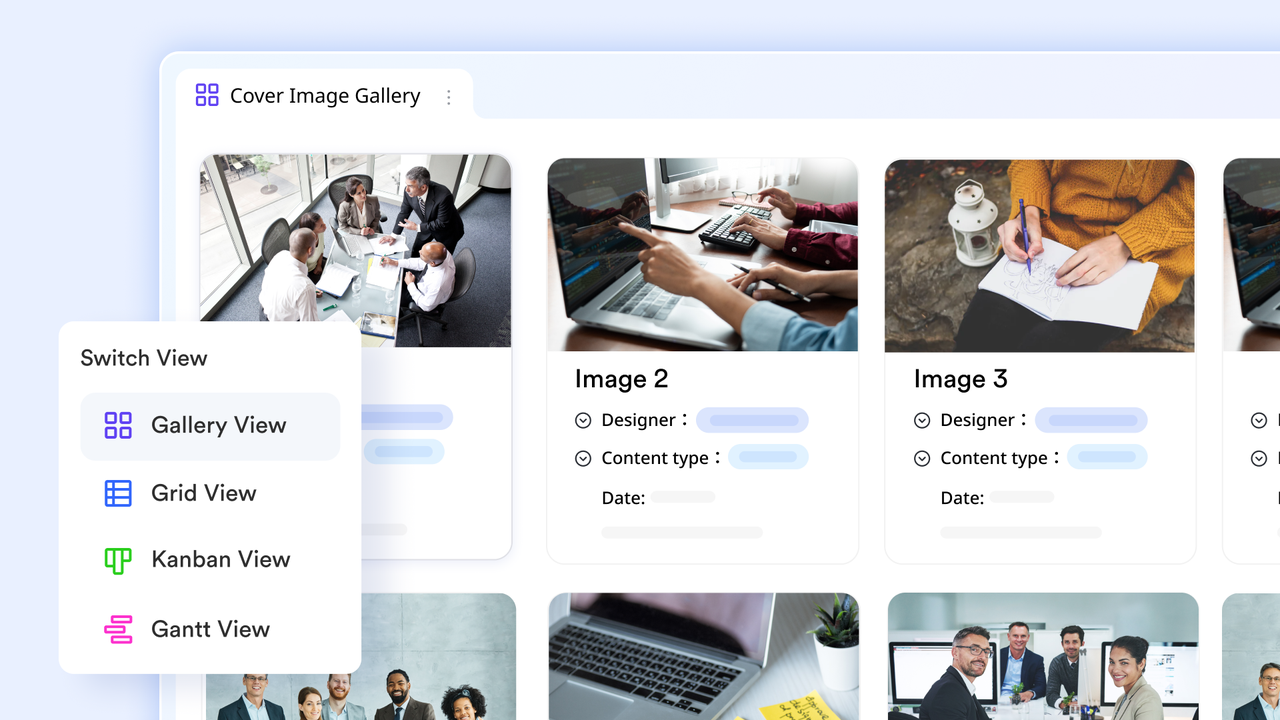
Eliminate manual data debt with Lark Base
The most efficient teams have realized that manual data entry is a relic of the past that drains creative energy. Lark Base functions as a relational database that structures information the moment it enters the workspace, turning raw data into actionable insights. This tool offers multi-dimensional cloud views, meaning one dataset can be viewed as a Gantt chart for project leads, a Kanban board for developers, or a Gallery view for designers, all updating simultaneously across the cloud. By automating the “connective tissue” between different departments, you prevent the data silos that typically slow down hyper-growth companies.
Unlock asynchronous focus with Lark Minutes
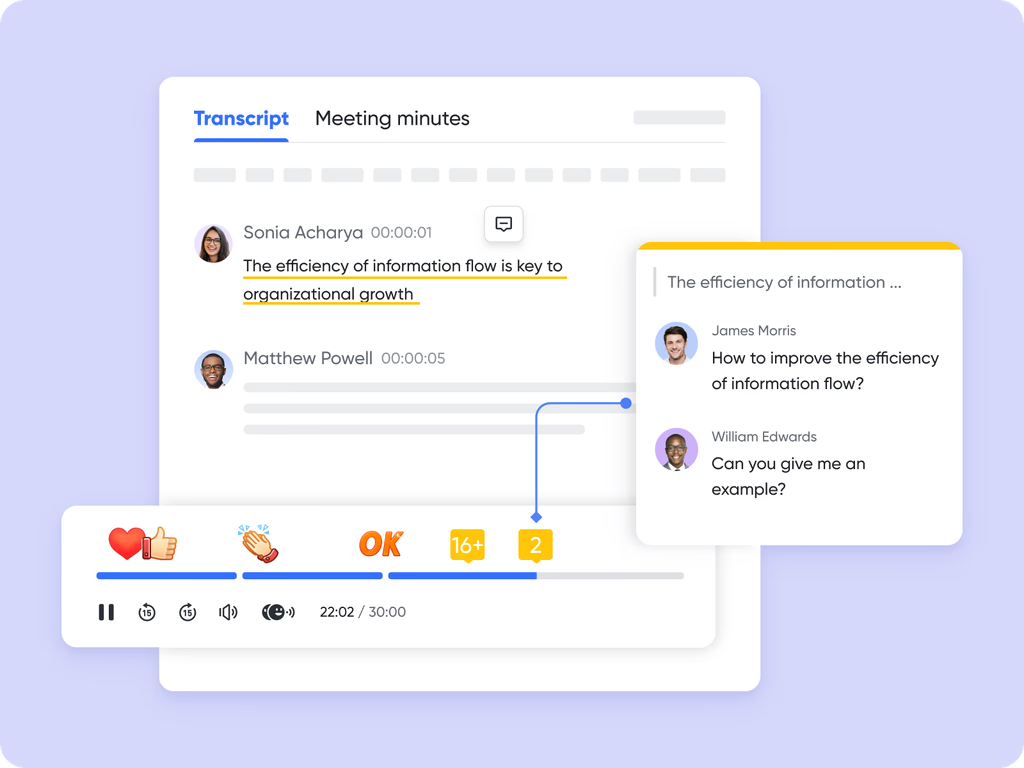
Meetings are often the most expensive form of administrative overhead, yet they yield the least searchable data. Lark Minutes solves this by turning every video call into a structured, searchable asset through AI-powered transcription and summarization. The system automatically extracts key decisions and action items, allowing team members who missed the call to catch up in minutes rather than re-watching an hour-long recording. In the familiar way most productivity tools strive for, Lark Minutes promotes a culture of deep work, as employees no longer feel pressured to attend every “status update” meeting to stay informed. By turning verbal communication into a permanent record, the organization ensures that no insights are lost and that every commitment is tracked until completion.
Accelerate operational cycle-time with Lark Approval
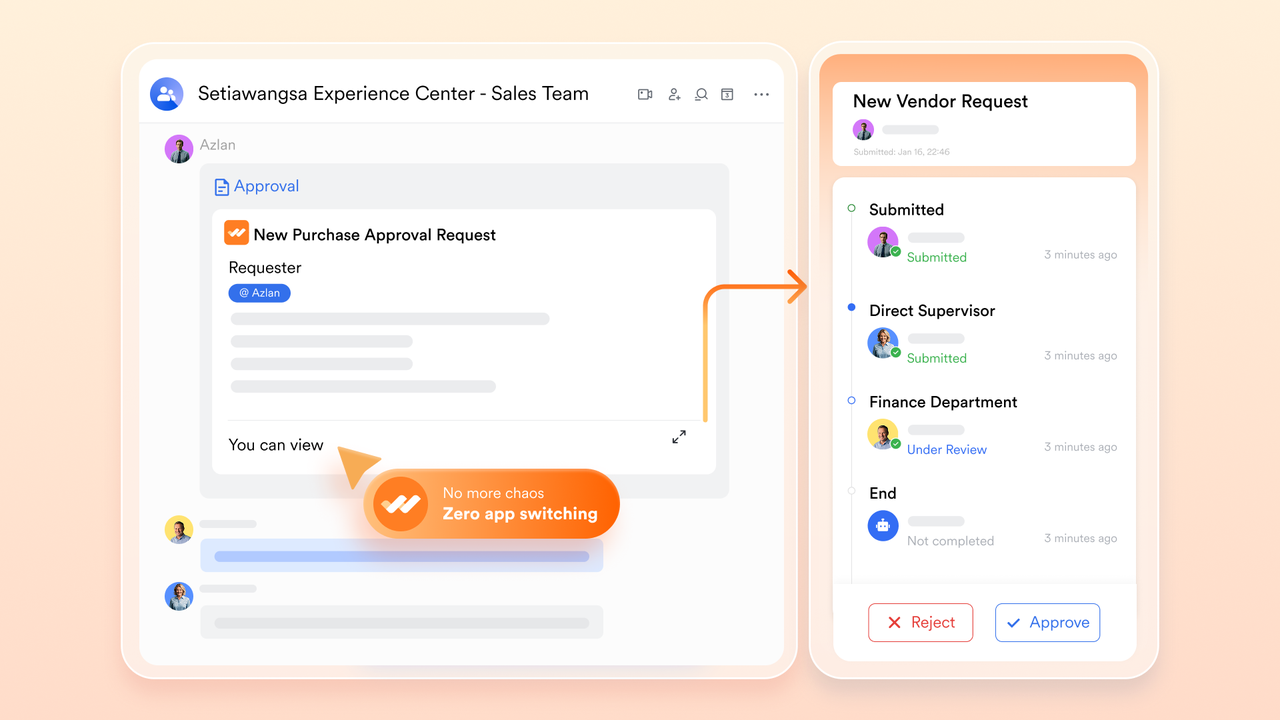
Bureaucracy is a silent bottleneck that can paralyze a fast-moving organization. Lark Approval moves essential governance workflows, such as expense sign-offs and contract reviews, directly into the communication stream. It features “Parallel Routing” and “Auto-Delegation,” which ensure that if one approver is unavailable, the request is automatically rerouted to a backup. This prevents projects from stalling and allows managers to provide oversight with a single tap on their mobile device. By unifying approvals with the rest of the workspace, companies maintain a clear audit trail without sacrificing the speed and agility required to compete in a modern market.
Bonus: The hidden cost of “App overload”
When a business grows, the first move is usually to check Google Workspace pricing to see the cost of adding basic seats for email and storage. It feels like a simple, manageable line item. But the real “productivity leak” starts when those basic tools can’t handle the complex tracking a big team needs. To fill the gaps, companies often start layering on extra monthly bills: $12 for a task tracker like Asana, $8 for a chat tool like Slack, and $15 for a meeting app like Zoom.
Before you know it, you are paying for five different passwords and five different notification settings per person. This isn’t just a budget issue; it’s a “mental tax” on your staff. Your team ends up spending a huge chunk of their morning just “checking the apps”—looking for a client’s comment in one place, then hunting for a related file in a folder, then updating a status on a separate board. When your info is scattered across these digital islands, your team spends more time “managing the mess” than doing the work that actually moves the needle.
Lark flips this model by bringing your team’s chat, task databases, and video calls into one unified home. Instead of juggling a dozen different bills and browser tabs, you have one clear, high-speed view of your entire operation. This doesn’t just lower your monthly overhead; it removes the digital friction that holds teams back, allowing you to focus entirely on business growth.
Conclusion
Productivity in the modern era is no longer measured by the sheer volume of tasks completed, but by how little time a team spends “managing work” versus actually “doing work.” Fragmented cloud apps and siloed data create a friction that inevitably slows down even the most talented teams.
By consolidating strategic goals, institutional knowledge, and project data into a synchronized environment like Lark and a modern set of productivity tools, you aren’t just saving on per-seat licenses, you are building an automated foundation that allows your business to scale at the speed of the market. The ability to see your entire operation in one window, with communication and data natively linked, is not just convenience; it is a strategic necessity for the modern enterprise seeking to reclaim its collective focus and drive sustainable business growth.