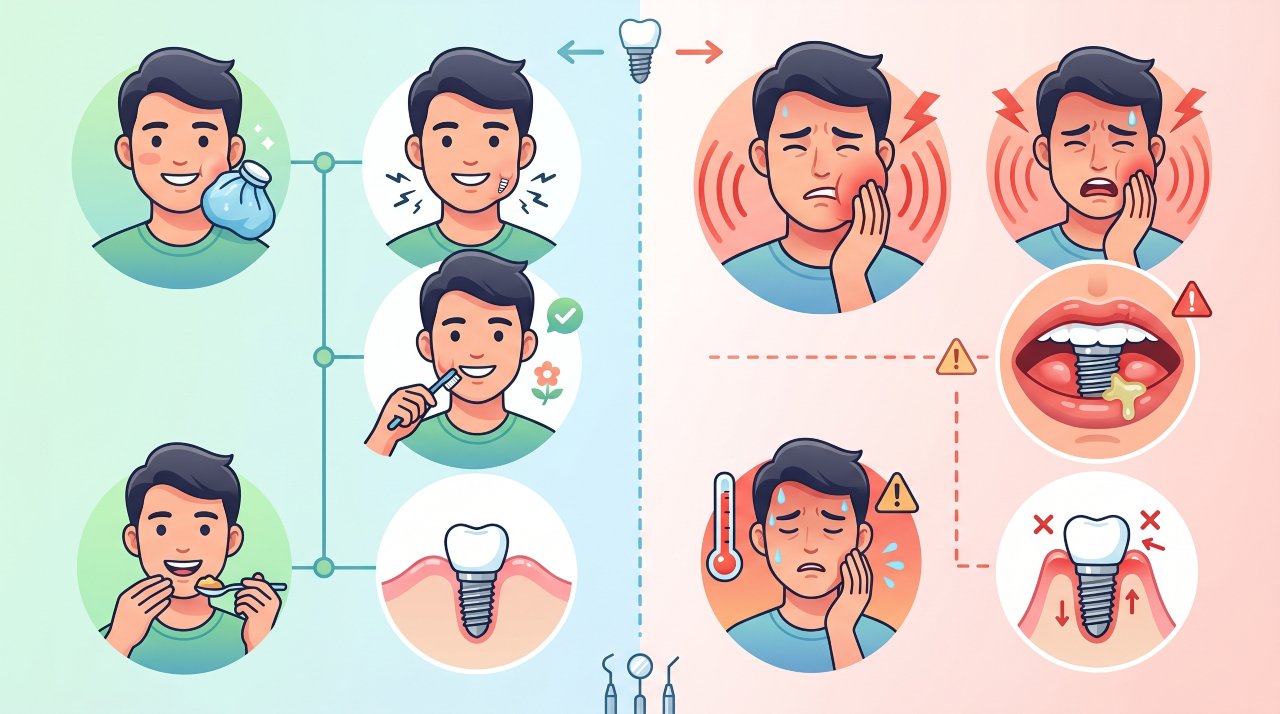
Dental implant surgery changes how you eat, speak, and smile. It can also leave you scared about pain. You need clear answers. After surgery, some pain is normal. Strong pain that does not ease is not. This blog explains what you should feel, what should worry you, and when you must call your dentist. You will learn how long soreness usually lasts, what swelling and bruising mean, and which signs point to a problem. You will also see simple ways to ease pain at home and protect your healing mouth. If you are planning dental implants Grand Rapids, MI or you already had surgery, you deserve straight facts. Pain can signal normal healing. It can also warn you when something is wrong. Knowing the difference helps you act fast and protect your health.
What pain feels normal after dental implant surgery
Early pain usually follows a clear pattern. It starts strong, then fades each day. You may feel:
- A dull ache near the implant
- Soreness when you chew on that side
- Tender gums around the stitches
- Mild swelling in your cheek or lip
According to the National Institute of Dental and Craniofacial Research, pain after oral surgery usually improves within a few days. You should notice that:
- Day 1 hurts the most
- Day 2 and 3 stay sore but not worse
- After Day 3, pain starts to ease
Normal pain lets you sleep with medicine. It also does not stop you from drinking water or taking soft food.
Normal healing timeline for pain and swelling
Use this table as a simple guide. Everybody heals at their own speed, yet the pattern stays close.
| Time after surgery | Normal pain and swelling | Warning signs
|
|---|---|---|
| 0 to 24 hours | Strong soreness. Throbbing that eases with pain pills. Noticeable swelling. Small bleeding. | Heavy bleeding that soaks gauze. Pain that gets worse even with medicine. |
| Day 2 to 3 | Still sore. Swelling at its peak. Bruising may show. Pain stable or slightly better. | New sharp pain. Swelling that spreads to the eye or neck. Trouble swallowing or breathing. |
| Day 4 to 7 | Pain dropping each day. Swelling and bruising are fading. Easier to chew soft food. | Pain is the same or worse than on Day 1. Bad taste. Pus. Fever. |
| Week 2 to 3 | Mild soreness with pressure or chewing. Gums less tender. | New pain after a pain-free gap. Gum pulling away. The implant feels loose. |
| After 1 month | Little or no pain in daily life. | Ongoing ache. Pain with light touch. Clicking or movement at the implant. |
Red flag pain that is not normal
Some pain means trouble. You should act fast if you notice:
- Pain that gets stronger after Day 3
- Pain that wakes you even with medicine
- Burning or electric shock pain in your lip, chin, or tongue
- Swelling that doubles in size or feels hard
- Yellow or green pus from the site
- Bad smell that brushing does not fix
- Fever or chills
- New trouble opening your mouth
These signs can point to infection, nerve damage, or a loose implant. Each one needs quick care.
How to ease normal pain at home
You can lower normal pain with simple steps. Your dentist may repeat some of these. Follow your own plan first.
- Use cold packs on the cheek for 10 to 20 minutes at a time during the first day
- Take pain medicine on schedule as prescribed
- Choose soft food such as yogurt, soup, eggs, and mashed potatoes
- Chew on the other side of your mouth
- Sleep with your head raised on extra pillows the first few nights
Later in the week, your dentist may allow warm salt water rinses. That can calm sore gums and wash away food. Use one-half teaspoon of salt in one cup of warm water. Swish gently, then spit.
Protect the implant site while you heal
Careless habits can turn normal pain into a serious problem. You should:
- Keep fingers and tongue away from the stitches
- Avoid smoking or vaping, which slows healing
- Skip alcohol until your dentist says it is safe
- Stay away from hard or sticky food such as nuts, chips, and candy
- Brush the rest of your teeth as usual, but use care near the surgery spot
The American Dental Association explains that clean teeth help protect implants. Strong home care lowers your risk of infection and long-lasting pain.
When to call your dentist or seek urgent care
Do not wait and hope pain will pass if you feel scared. You should call your dentist right away if:
- Pain stays at a high level after Day 3
- Swelling or bruising spread quickly
- You see pus or thick discharge
- Your implant feels loose or moves when you bite
- Your lip, chin, or tongue feels numb or tingly
Seek emergency care if you:
- Have trouble breathing
- Cannot swallow your own saliva
- Have swelling near your throat or eye
Quick care can save the implant. It can also protect your jaw and your general health.
Moving forward with less fear
Pain after dental implants can feel scary, yet it often follows a clear and short pattern. Normal pain fades step by step. It lets you drink, eat soft food, and rest with help from medicine. Abnormal pain grows stronger, spreads, or comes with fever, pus, or numbness. That pain demands fast contact with your dentist.
When you know what to expect, you can plan. You can set up soft meals, line up help at home, and protect your healing mouth. You also gain the strength to speak up early if something feels wrong. That simple step can keep your new implant strong and your body safe.