
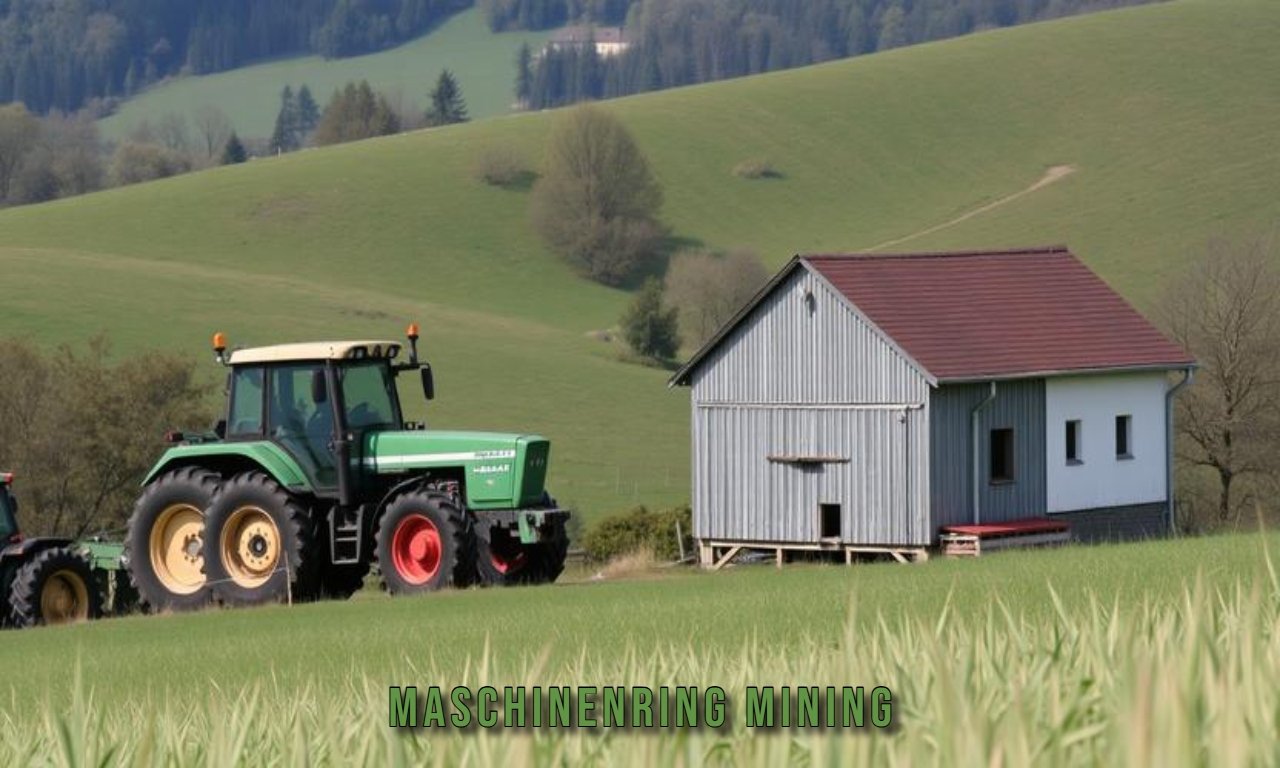
In the rolling hills of the Austrian and German countryside, a quiet revolution has been underway for over half a century. It is not a revolution of protests or politics, but one of pragmatism. The Maschinenring (German for “machinery ring”) has long been the backbone of European agriculture, allowing small family farms to survive against industrial giants through the power of sharing.
But the landscape of rural Europe is changing. As traditional farming margins shrink, the Maschinenring has evolved. Today, a new frontier is emerging that leverages the same cooperative principles for heavy industry: Maschinenring Mining.
The Genesis of the Ring
To understand Maschinenring mining, one must first understand the DNA of the Maschinenring itself. Born in Bavaria in 1958 and spreading across Austria and Germany, the concept was simple yet disruptive. Farmers realized that no single farmer could afford a $500,000 harvester or a fleet of tractors used only three weeks a year.
Dr. Erich Geiersberger, the movement’s founder, proposed a system of “self-help” where farmers would pool resources. This model proved extraordinarily effective. In Austria alone, the Maschinenring represents approximately 73,699 member businesses, collectively managing over half of the nation’s agricultural land.
However, by the 1990s, the organization faced a familiar economic pressure. As Martin Krispler, Managing Director of Maschinenring Salzburg, noted, the organization realized that the peak season for harvesting is only a few months long. To keep their highly skilled members and expensive machinery employed year-round, they needed to look beyond the farm gate.
Read: Field-Ready Water Solutions for Unpredictable Terrain
The Diversification into Industry
The transition from silage to soil excavation was a natural progression. The skills required for modern agriculture—operating GPS-guided tractors, maintaining hydraulic systems, performing precise earthworks—are identical to those needed in construction and mining.
Maschinenring organizations began offering commercial services to municipalities and businesses. Winter road clearance, landscaping, and forestry management quickly became core revenue streams . This demonstrated a critical capability: the ability to execute industrial-scale contracts using a cooperative, decentralized workforce.
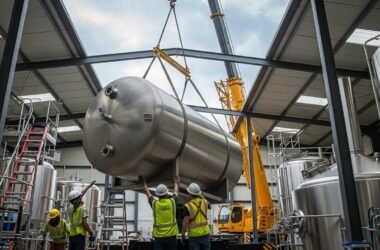
This evolution is formally recognized in the corporate charters of modern Maschinenring entities. For instance, the purpose of Maschinenring Ebersberg GmbH explicitly includes “mining support service activities” alongside traditional forestry and agriculture . This legal and operational pivot opens the door for Maschinenring mining to operate as a legitimate, competitive force in the extractive sector.
The Maschinenring Mining Model in Practice
How does Maschinenring mining work in a practical sense? Unlike multinational mining corporations that own their massive dump trucks and excavators, the Maschinenring typically operates as an intermediary or a cooperative. The “Ring” does not usually own the iron; the members do.
Maschinenring mining leverages the sharing economy on an industrial scale.
Asset Utilization: A local contractor might own a 35-ton excavator. If their primary construction project finishes, that asset sits idle—bleeding capital. The Maschinenring acts as a dispatch hub, finding Maschinenring mining contracts where that excavator can be moved to a quarry or mine site.
Specialized Labor: Mining often requires specific certifications (blasting, ventilation, highwall stability). The Maschinenring pools its members for training, allowing small rural contractors to become certified for Maschinenring mining projects they could never bid on alone.
Synergies with Renewable Energy and Biofuels
One of the most compelling arguments for Maschinenring mining is its intersection with the green transition. The mining industry is currently under immense pressure to decarbonize. Heavy diesel vehicles are a primary source of Scope 1 emissions.
Here, the Maschinenring brings a unique asset to the table: the “Öltraktor” or oil tractor. Through initiatives like the Maschinenring Oil Mills, the cooperative produces pure, climate-neutral, plant-based fuel from rapeseed grown by its members.
In a Maschinenring mining scenario, the same cooperative that grows the fuel could retrofit or supply mining equipment to run on that fuel. While fully electric mining haul trucks are on the horizon, the immediate future likely involves carbon-neutral liquid fuels. The Maschinenring has the vertical integration—from seed to engine—to provide “Tank-to-Wheel” carbon neutrality for mining operations, a selling point no traditional mining contractor can easily match.
Efficiency and the Bottom Line
Why would a mining company choose Maschinenring mining over a traditional heavy civil contractor? The answer lies in financial structure.
In traditional contracting, a company charges a premium to cover the risk of their machinery sitting idle between jobs. The Maschinenring model mitigates this risk through diversification. Data from agricultural divisions of the Maschinenring show that members can reduce machine costs by over 14% compared to non-members through shared usage. Maschinenring mining applies the same principle.
Furthermore, the cooperative model ensures capital remains local. “Ninety percent of investments are made regionally,” notes the leadership of Maschinenring Salzburg. For mining companies looking to improve their Environmental, Social, and Governance (ESG) scores, specifically the “Social” pillar, contracting with a local Maschinenring mining cooperative generates goodwill and ensures money spent on logistics stays in the community, rather than leaving the region with a global contractor.
Digital Innovation: The RTK Signal
Maschinenring mining is not a step backward into rustic ways; it is a leader in precision technology. The organization has developed the Maschinenring RTK (Real-Time Kinematic) Signal. This satellite correction service allows any machine—regardless of brand—to operate with +/- 2.5 cm accuracy.
In mining, precision is safety. Whether drilling blast holes or grading a tailings dam, Maschinenring mining utilizes this open-source digital infrastructure to ensure that a John Deere, a Cat, and a Fendt can all talk to the same GPS network. This “tech-neutral” approach is revolutionary in an industry where manufacturers often try to lock users into proprietary systems.
The Future of Maschinenring Mining
The German and Austrian Maschinenring models are now serving as blueprints for other industries. As supply chains become more volatile and labor shortages worsen, the need for flexible, shared labor pools is critical.
We are already seeing the emergence of “Virtual OEMs” (Original Equipment Manufacturers), a concept discussed in Maschinenring podcasts. Where small metalworking shops share the cost of expensive 3D printers or laser cutters to compete with giants. Maschinenring mining is the heavy-duty cousin of this movement. It allows small, family-owned earthmoving businesses to band together to bid on major overburden removal or reclamation projects.
Maschinenring mining proves that the cooperative model is not just for hippies or hobbyists; it is a hard-nosed, financially optimal way to run heavy industry. It keeps the lights on for the family farm, and it keeps the wheels turning for the mining conglomerate—proving that sometimes, the oldest ideas about sharing are the most innovative.
In the dust and diesel of the quarry, the future of industrial cooperation is being written, not by faceless boards of directors, but by local hands on the wheel. That is the power of Maschinenring mining.